
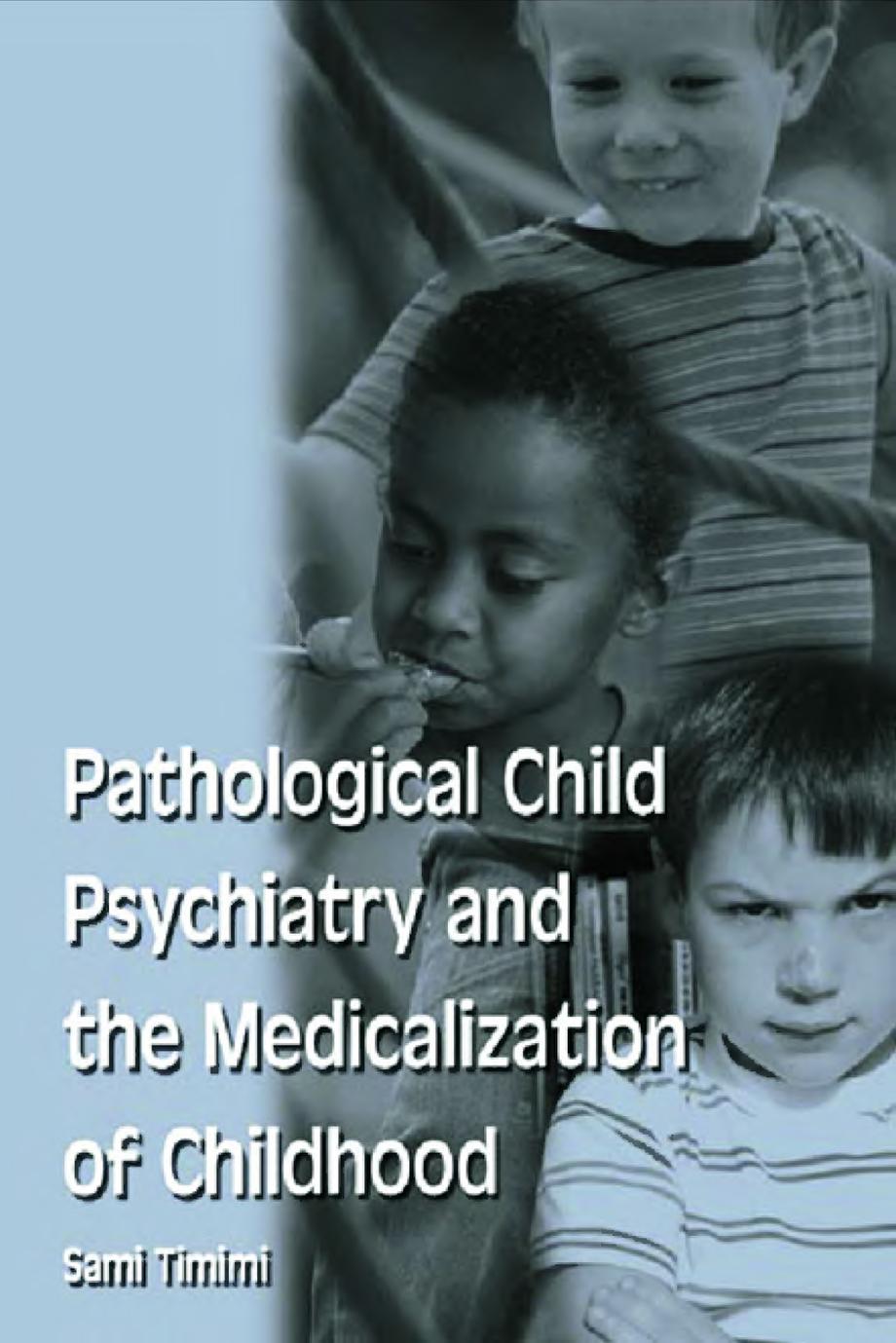
Currently, it is common practice among the child psychiatric establishment to prescribe powerful and potentially addictive drugs to children who have emotional or behavioural problems. Pathological Child Psychiatry and the Medicalization of Childhood is a strong challenge to this way of thinking.
Sami Timimi uses a wide variety of sources that shape our understanding including his personal experiences to highlight the role of culture, beliefs, science, social hierarchy and power, in shaping our understanding of childhood problems and how to deal with them. He urges professionals who work with children to question their assumptions in a manner that will enable them to access a greater variety of potentially helpful therapeutic frameworks.
Since the 1960s, psychiatry has had to learn to accommodate critical analysis of its beliefs and methods. The legitimacy of its core assumptions continues to be questioned. Now child psychiatry too must engage with such a debate, if it wishes to develop into a genuinely democratic and inclusive profession. Pathological Child Psychiatry and the Medicalization of Childhood will be of great interest to professionals and trainees in psychiatry and child psychiatry, social work, family therapy and other psychotherapies for children and adolescents.
Płać wygodnie kartą, Klarną, Apple Pay lub Google Pay. Nie jesteś zadowolony? Zawsze masz 14-dniową gwarancję zwrotu pieniędzy. Więcej przeczytasz w naszych warunkach. Masz pytania? Napisz do nas na hello@memmo.org.
Memmo ułatwia naukę – gdziekolwiek jesteś na świecie. U nas znajdziesz podręczniki i sprytne narzędzia do nauki w jednym miejscu: streszczenia, quizy, podcasty i fiszki. A do tego Ted, Twój kumpel do nauki, który odpowie na wszystko, co Cię nurtuje. Ponad 50 000 studentów już tu się uczy – stworzone, byś uczył się szybciej i mniej stresował.