
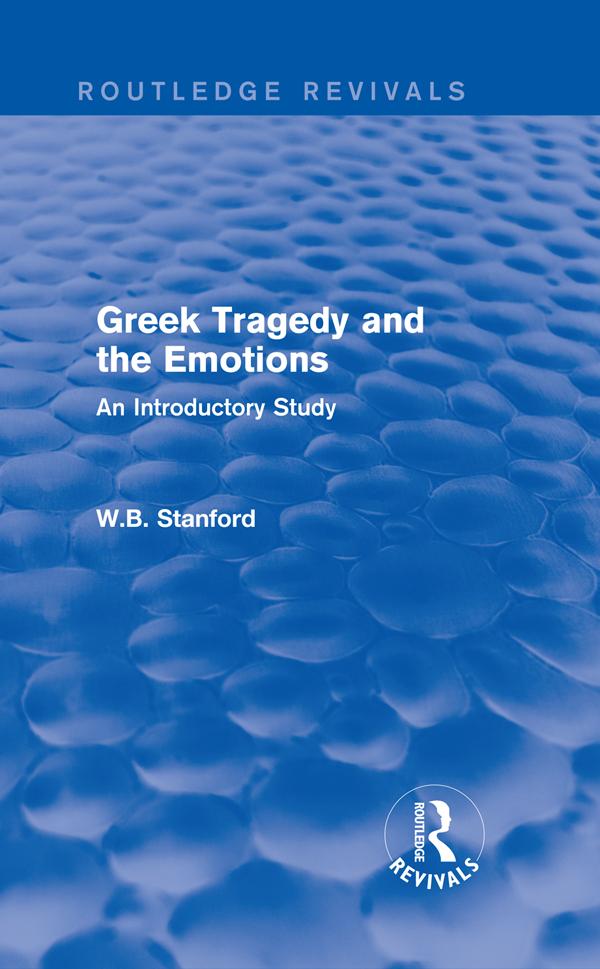
According to Aristotle the main purpose of tragedy is the manipulation of emotions, and yet there are relatively few accessible studies of the precise dynamics of emotion in the Athenian theatre.
In Greek Tragedy and the Emotions, first published in 1993, W.B. Stanford reviews the evidence for ‘emotionalism’ – as the great Attic playwrights presented it, as the actors and choruses expressed it, and as their audiences reacted to it. Sociological aspects of the issue are considered, and the whole range of emotions, not just ‘pity and fear’, is discussed. The aural, visual and stylistic methods of inciting emotion are analysed, and Aeschylus’ Oresteia is examined exclusively in terms of the emotions that it exploits. Finally, Stanford’s conclusions are contrasted with the accepted theories of tragic ‘catharsis’.
Greek terms are transliterated and all quotations are in translation, so Greek Tragedy and the Emotions will appeal particularly to those unfamiliar with Classical Greek.
Płać wygodnie kartą, Klarną, Apple Pay lub Google Pay. Nie jesteś zadowolony? Zawsze masz 14-dniową gwarancję zwrotu pieniędzy. Więcej przeczytasz w naszych warunkach. Masz pytania? Napisz do nas na hello@memmo.org.
Memmo ułatwia naukę – gdziekolwiek jesteś na świecie. U nas znajdziesz podręczniki i sprytne narzędzia do nauki w jednym miejscu: streszczenia, quizy, podcasty i fiszki. A do tego Ted, Twój kumpel do nauki, który odpowie na wszystko, co Cię nurtuje. Ponad 50 000 studentów już tu się uczy – stworzone, byś uczył się szybciej i mniej stresował.