
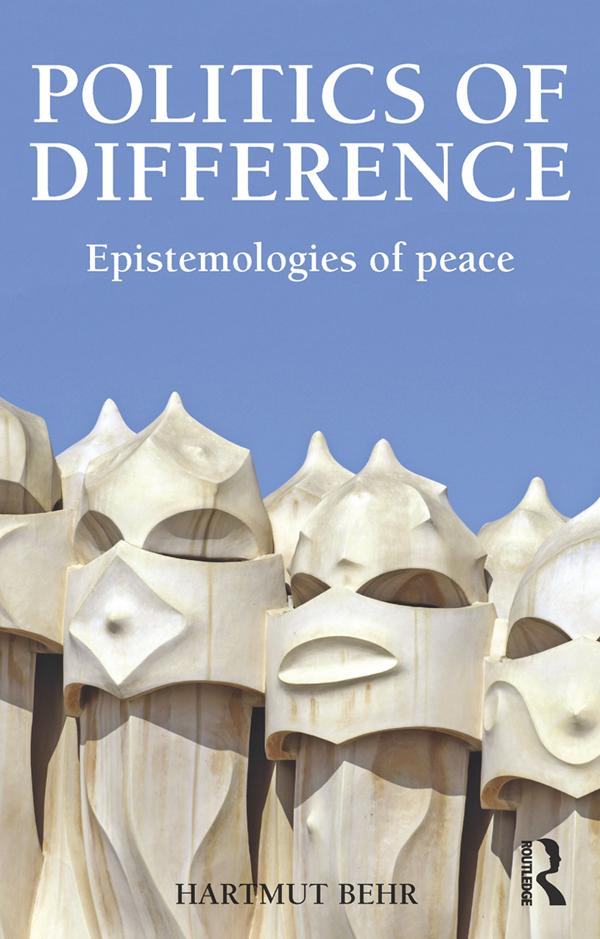
This book develops a notion of differences and 'otherness' beyond hegemonic and hierarchical thinking as represented by the legacies of Western philosophical and political thought.
In doing so, it relates to the phenomenological discourse of the twentieth century, especially to Georg Simmel, Alfred Schütz, Emmanual Lévinas, and Jacques Derrida, and drafts our understanding of difference as a genuine human experience of a social and political world that is in motion and transformative, rather than static and predictable. On this basis of temporalized ontology and its normative consequences, differences are drafted as a positive social and political force and as powerful capacities of transformation and change. In practical terms, this understanding is most important for our theorizing and acting upon peace, peace-building, and conflict solution. Differences now appear not as obstacle to peace and reconciliation, but as lively and constructive articulations of 'otherness' and as a positive power of transformation, emancipation, and change.
This book will be of interest to students of international relations, philosophy and political theory.
Płać wygodnie kartą, Klarną, Apple Pay lub Google Pay. Nie jesteś zadowolony? Zawsze masz 14-dniową gwarancję zwrotu pieniędzy. Więcej przeczytasz w naszych warunkach. Masz pytania? Napisz do nas na hello@memmo.org.
Memmo ułatwia naukę – gdziekolwiek jesteś na świecie. U nas znajdziesz podręczniki i sprytne narzędzia do nauki w jednym miejscu: streszczenia, quizy, podcasty i fiszki. A do tego Ted, Twój kumpel do nauki, który odpowie na wszystko, co Cię nurtuje. Ponad 50 000 studentów już tu się uczy – stworzone, byś uczył się szybciej i mniej stresował.