
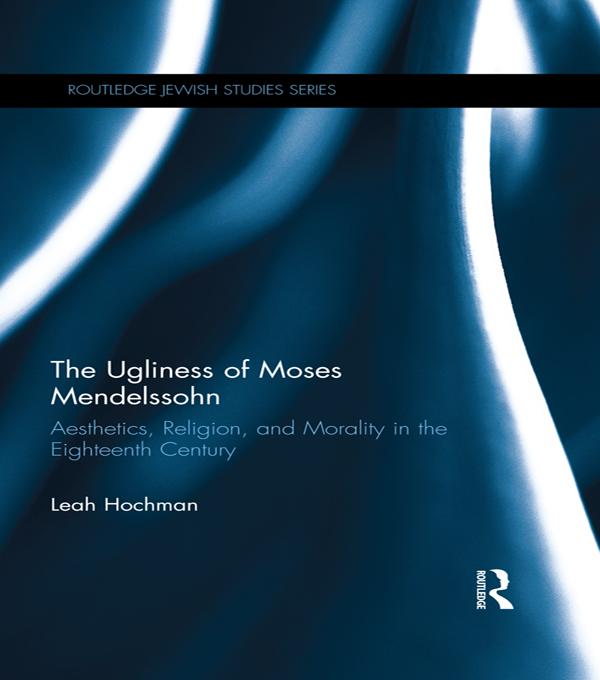
The Ugliness of Moses Mendelssohn examines the idea of ugliness through four angles: philosophical aesthetics, early anthropology, physiognomy and portraiture in the eighteenth-century.
Highlighting a theory that describes the benefit of encountering ugly objects in art and nature, eighteenth-century German Jewish philosopher Moses Mendelssohn recasts ugliness as a positive force for moral education and social progress. According to his theory, ugly objects cause us to think more and thus exercise—and expand—our mental abilities. Known as ugly himself, he was nevertheless portrayed in portraits and in physiognomy as an image of wisdom, gentility, and tolerance. That seeming contradiction—an ugly object (Mendelssohn) made beautiful—illustrates his theory’s possibility: ugliness itself is a positive, even redeeming characteristic of great opportunity.
Presenting a novel approach to eighteenth century aesthetics, this book will be of interest to students and scholars in the fields of Jewish Studies, Philosophy and History.
Płać wygodnie kartą, Klarną, Apple Pay lub Google Pay. Nie jesteś zadowolony? Zawsze masz 14-dniową gwarancję zwrotu pieniędzy. Więcej przeczytasz w naszych warunkach. Masz pytania? Napisz do nas na hello@memmo.org.
Memmo ułatwia naukę – gdziekolwiek jesteś na świecie. U nas znajdziesz podręczniki i sprytne narzędzia do nauki w jednym miejscu: streszczenia, quizy, podcasty i fiszki. A do tego Ted, Twój kumpel do nauki, który odpowie na wszystko, co Cię nurtuje. Ponad 50 000 studentów już tu się uczy – stworzone, byś uczył się szybciej i mniej stresował.