
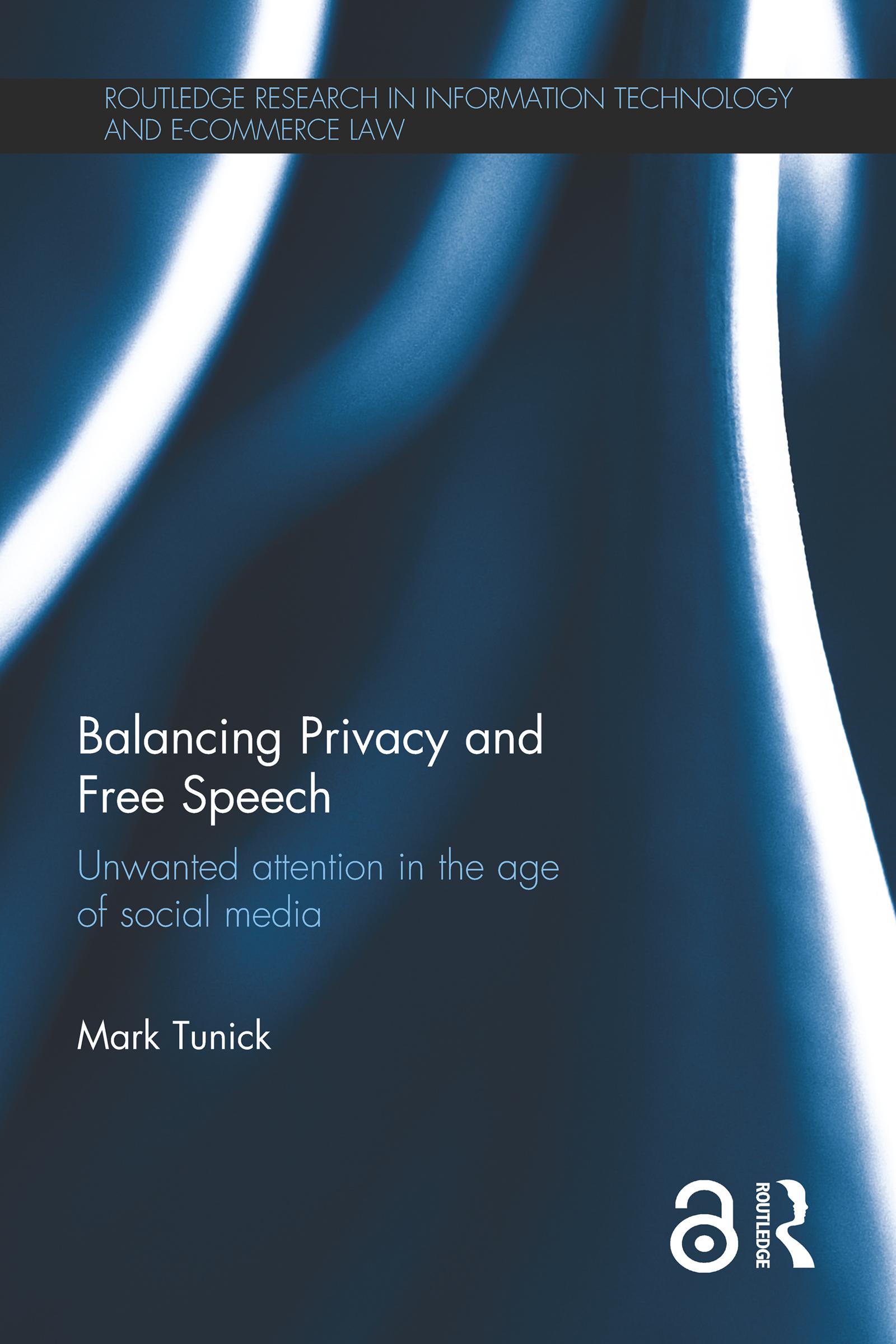
In an age of smartphones, Facebook and YouTube, privacy may seem to be a norm of the past. This book addresses ethical and legal questions that arise when media technologies are used to give individuals unwanted attention. Drawing from a broad range of cases within the US, UK, Australia, Europe, and elsewhere, Mark Tunick asks whether privacy interests can ever be weightier than society’s interest in free speech and access to information.
Taking a comparative and interdisciplinary approach, and drawing on the work of political theorist Jeremy Waldron concerning toleration, the book argues that we can still have a legitimate interest in controlling the extent to which information about us is disseminated. The book begins by exploring why privacy and free speech are valuable, before developing a framework for weighing these conflicting values. By taking up key cases in the US and Europe, and the debate about a ‘right to be forgotten’, Tunick discusses the potential costs of limiting free speech, and points to legal remedies and other ways to develop new social attitudes to privacy in an age of instant information sharing.
This book will be of great interest to students of privacy law, legal ethics, internet governance and media law in general.
Płać wygodnie kartą, Klarną, Apple Pay lub Google Pay. Nie jesteś zadowolony? Zawsze masz 14-dniową gwarancję zwrotu pieniędzy. Więcej przeczytasz w naszych warunkach. Masz pytania? Napisz do nas na hello@memmo.org.
Memmo ułatwia naukę – gdziekolwiek jesteś na świecie. U nas znajdziesz podręczniki i sprytne narzędzia do nauki w jednym miejscu: streszczenia, quizy, podcasty i fiszki. A do tego Ted, Twój kumpel do nauki, który odpowie na wszystko, co Cię nurtuje. Ponad 50 000 studentów już tu się uczy – stworzone, byś uczył się szybciej i mniej stresował.