
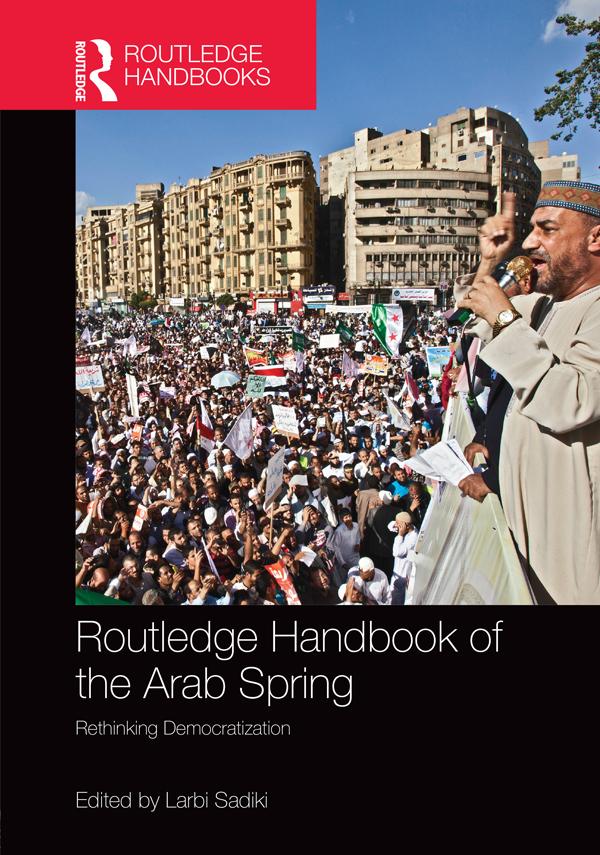
The self-immolation of Mohammed Bouazizi in Tunisia in December 2010 heralded the arrival of the ‘Arab Spring,’ a startling, yet not unprecedented, era of profound social and political upheaval.
The meme of the Arab Spring is characterised by bottom-up change, or the lack thereof, and its effects are still unfurling today. The Routledge Handbook of the Arab Spring seeks to provide a departure point for ongoing discussion of a fluid phenomenon on a plethora of topics, including:
- Contexts and contests of democratisation
- The sweep of the Arab Spring
- Egypt
- Women and the Arab Spring
- Agents of change and the technology of protest
- Impact of the Arab Spring in the wider Middle East and further afield
Collating a wide array of viewpoints, specialisms, biases, and degrees of proximity and distance from events that shook the Arab world to its core, the Handbook is written with the reader in mind, to provide students, practitioners, diplomats, policy-makers and lay readers with contextualization and knowledge, and to set the stage for further discussion of the Arab Spring.
Płać wygodnie kartą, Klarną, Apple Pay lub Google Pay. Nie jesteś zadowolony? Zawsze masz 14-dniową gwarancję zwrotu pieniędzy. Więcej przeczytasz w naszych warunkach. Masz pytania? Napisz do nas na hello@memmo.org.
Memmo ułatwia naukę – gdziekolwiek jesteś na świecie. U nas znajdziesz podręczniki i sprytne narzędzia do nauki w jednym miejscu: streszczenia, quizy, podcasty i fiszki. A do tego Ted, Twój kumpel do nauki, który odpowie na wszystko, co Cię nurtuje. Ponad 50 000 studentów już tu się uczy – stworzone, byś uczył się szybciej i mniej stresował.