
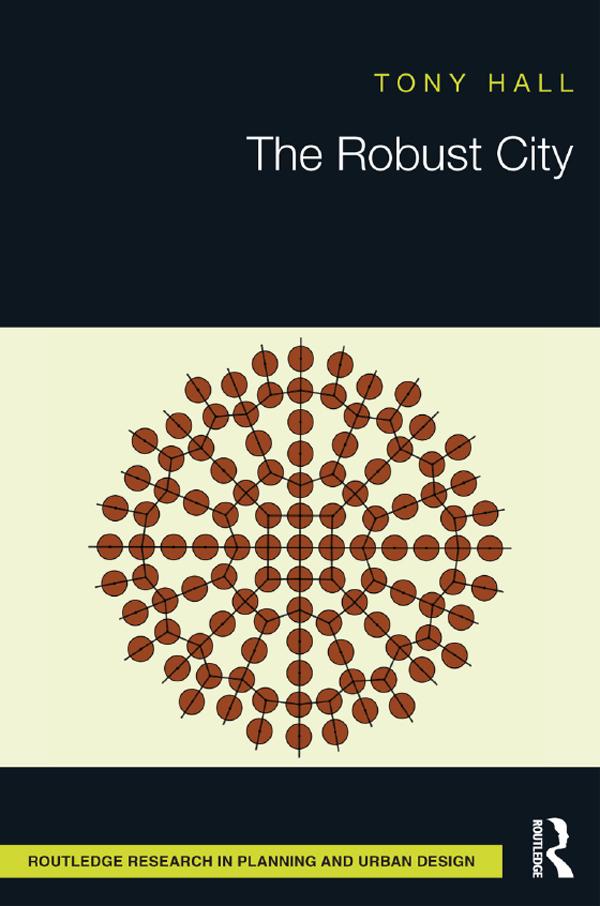
Cities expand, upwards and outwards, and their physical structure can last a very long time, not just tens but hundreds of years. Nevertheless, they are rarely designed for expansion. Their layout does not allow for extension or for the retrofitting of infrastructure and can constrain, and often prevent, the growth and change of activities within them - cities are not 'robust' in their design. In other words, change is not planned for but involves costly reconstruction.
The Robust City argues that a robust, expandable and sustainable urban form can be deduced from planning goals. Development should not just follow public transport corridors but should not be allowed beyond walking distance from them. This would create 'green enclaves' that would permit not only recreational access but also the retrofitting of infrastructure and the efficient circulation of motor vehicles. The same principles could also be applied within neighbourhoods and to facilitate the rational handling of urban intensification.
Płać wygodnie kartą, Klarną, Apple Pay lub Google Pay. Nie jesteś zadowolony? Zawsze masz 14-dniową gwarancję zwrotu pieniędzy. Więcej przeczytasz w naszych warunkach. Masz pytania? Napisz do nas na hello@memmo.org.
Memmo ułatwia naukę – gdziekolwiek jesteś na świecie. U nas znajdziesz podręczniki i sprytne narzędzia do nauki w jednym miejscu: streszczenia, quizy, podcasty i fiszki. A do tego Ted, Twój kumpel do nauki, który odpowie na wszystko, co Cię nurtuje. Ponad 50 000 studentów już tu się uczy – stworzone, byś uczył się szybciej i mniej stresował.