
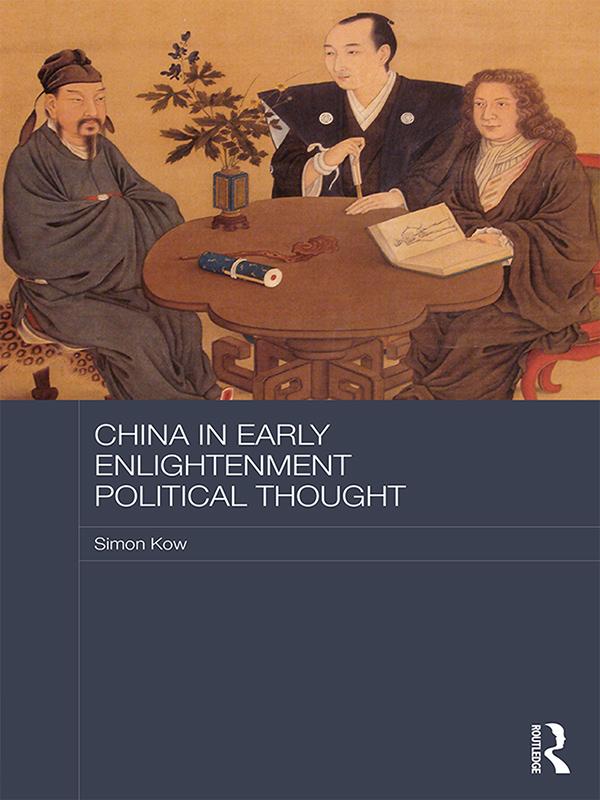
China in Early Enlightenment Political Thought examines the ideas of China in the works of three major thinkers in the early European Enlightenment of the late seventeenth to early eighteenth centuries: Pierre Bayle, Gottfried Wilhelm Leibniz, and the Baron de Montesquieu. Unlike surveys which provide only cursory overviews of Enlightenment views of China, or individual studies of each thinker which tend to address their conceptions of China in individual chapters, this is the first book to provide in-depth comparative analyses of these seminal Enlightenment thinkers that specifically link their views on China to their political concerns. Against the backdrop especially of the Jesuit accounts of China which these philosophers read, Bayle, Leibniz, and Montesquieu interpreted imperial China in three radically divergent ways: as a tolerant, atheistic monarchy; as an exemplar of human and divine justice; and as an exceptional but nonetheless corrupt despotic state. The book thus shows how the development of political thought in the early Enlightenment was closely linked to the question of China as a positive or negative model for Europe, and argues that revisiting Bayle’s approach to China is a salutary corrective to the errors and presumptions in the thought of Leibniz and Montesquieu. The book also discusses how Chinese reformers of the late nineteenth and early twentieth centuries drew on Enlightenment writers’ different views of China as they sought to envisage how China should be remodeled.
Płać wygodnie kartą, Klarną, Apple Pay lub Google Pay. Nie jesteś zadowolony? Zawsze masz 14-dniową gwarancję zwrotu pieniędzy. Więcej przeczytasz w naszych warunkach. Masz pytania? Napisz do nas na hello@memmo.org.
Memmo ułatwia naukę – gdziekolwiek jesteś na świecie. U nas znajdziesz podręczniki i sprytne narzędzia do nauki w jednym miejscu: streszczenia, quizy, podcasty i fiszki. A do tego Ted, Twój kumpel do nauki, który odpowie na wszystko, co Cię nurtuje. Ponad 50 000 studentów już tu się uczy – stworzone, byś uczył się szybciej i mniej stresował.