
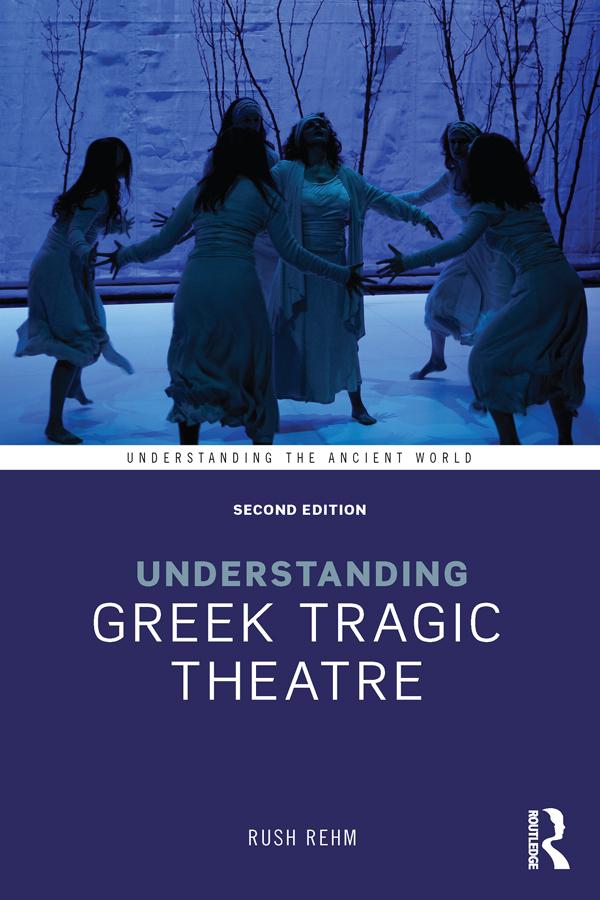
Understanding Greek Tragic Theatre, a revised edition of Greek Tragic Theatre (1992), is intended for those interested in how Greek tragedy works. By analysing the way the plays were performed in fifth-century Athens, Rush Rehm encourages classicists, actors, and directors to approach Greek tragedy by considering its original context.
Emphasizing the political nature of tragedy as a theatre of, by, and for the polis, Rehm characterizes Athens as a performance culture, one in which the theatre stood alongside other public forums as a place to confront matters of import and moment. In treating the various social, religious and practical aspects of tragic production, he shows how these elements promoted a vision of the theatre as integral to the life of the city – a theatre whose focus was on the audience.
The second half of the book examines four exemplary plays, Aeschylus’ Oresteia trilogy, Sophocles’ Oedipus Tyrannus, and Euripides’ Suppliant Women and Ion. Without ignoring the scholarly tradition, Rehm focuses on how each tragedy unfolds in performance, generating different relationships between the characters (and chorus) on stage and the audience in the theatre.
Płać wygodnie kartą, Klarną, Apple Pay lub Google Pay. Nie jesteś zadowolony? Zawsze masz 14-dniową gwarancję zwrotu pieniędzy. Więcej przeczytasz w naszych warunkach. Masz pytania? Napisz do nas na hello@memmo.org.
Memmo ułatwia naukę – gdziekolwiek jesteś na świecie. U nas znajdziesz podręczniki i sprytne narzędzia do nauki w jednym miejscu: streszczenia, quizy, podcasty i fiszki. A do tego Ted, Twój kumpel do nauki, który odpowie na wszystko, co Cię nurtuje. Ponad 50 000 studentów już tu się uczy – stworzone, byś uczył się szybciej i mniej stresował.