
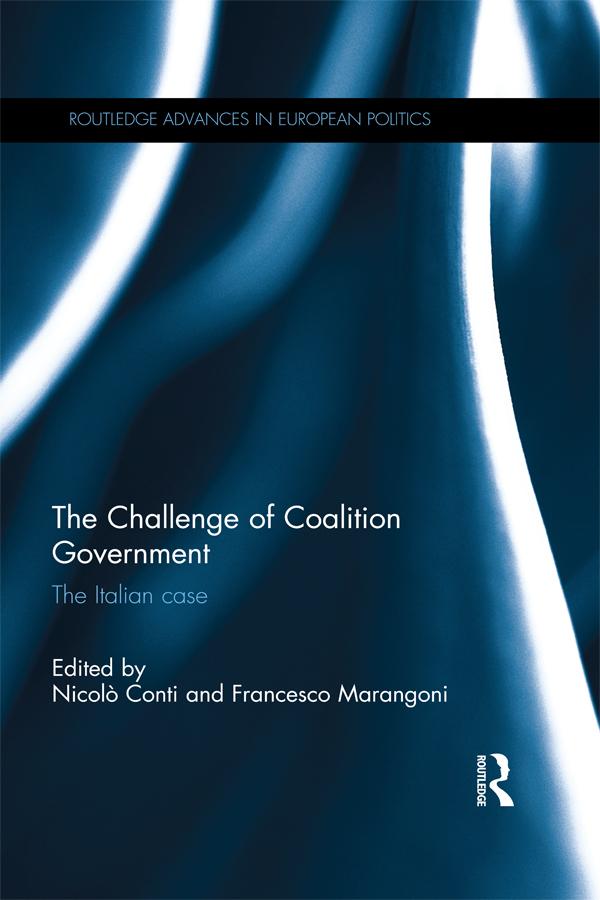
Since the advent of the Second Republic in Italy in the mid-1990s, a new generation of politicians has announced a shift in the system toward greater governmental leadership, policy innovation, government accountability and responsiveness to the citizens. Yet in recent years government has experienced frequent crises and deadlocks, policy blockades and undisciplined parliamentary majorities. Has the attempt to change the nature of the Italian government totally failed?
This book addresses this question by empirically assessing and theoretically evaluating the outcomes of the new system. It asks whether there has really been a shift toward a more majoritarian democracy and examines why alternation in power has failed to produce a more efficient and responsive government. It evaluates the connections between cabinet, parliament, parties and citizens, and in doing so, brings together diverse areas of inquiry such as government, legislative, party and public opinion studies. Drawing from comparative theory but also considering the impact of country-specific determinants, it explains the very nature of the Italian government from the point of view of its achievements and its failures.
This text will be of key interest to scholars and students of government, comparative and Italian politics, and more broadly those with an interest in government, democracy and Italy.
Płać wygodnie kartą, Klarną, Apple Pay lub Google Pay. Nie jesteś zadowolony? Zawsze masz 14-dniową gwarancję zwrotu pieniędzy. Więcej przeczytasz w naszych warunkach. Masz pytania? Napisz do nas na hello@memmo.org.
Memmo ułatwia naukę – gdziekolwiek jesteś na świecie. U nas znajdziesz podręczniki i sprytne narzędzia do nauki w jednym miejscu: streszczenia, quizy, podcasty i fiszki. A do tego Ted, Twój kumpel do nauki, który odpowie na wszystko, co Cię nurtuje. Ponad 50 000 studentów już tu się uczy – stworzone, byś uczył się szybciej i mniej stresował.