
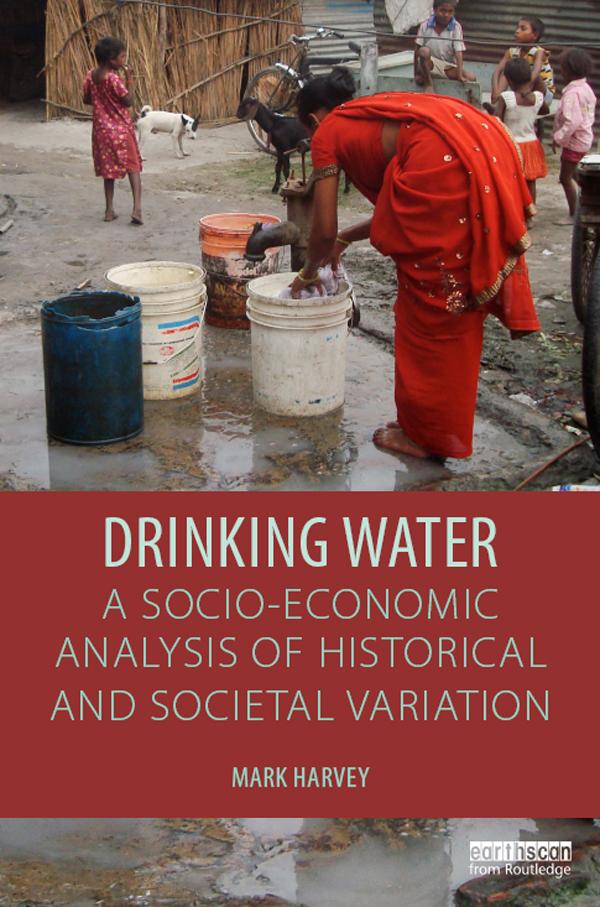
In this fascinating and challenging work, the author analyses the way water for drinking is produced, distributed, owned, acquired, and consumed in contrasting ways in different settings. From the taken-for-granted, all-purpose water, flowing out of taps in advanced economies to extreme inequalities of access to water of variable qualities, drinking water tells its own interesting story, but also reflects some of the centrally important characteristics of the state and economies of the different countries. From sparkling mineral water in Germany, to drinking water garages in Taiwan, from water tankers in Mexico City to street vendors in Delhi markets, comparisons are made to stretch our understanding of what we mean by ‘an economy’, quality, and property rights, of water.
In addition, the study of socio-economics of drinking water provides a route into understanding interactions between polity, economy and nature. One of the major themes of the book is to analyse the ‘sociogenic’ nature of sustainability crises of economies of water in their environmental settings: epidemics, droughts, pollution, land subsidences and floods. Overall it develops an economic sociology, neo-Polanyian approach in a comparative and historical exploration of water for domestic consumption.
Płać wygodnie kartą, Klarną, Apple Pay lub Google Pay. Nie jesteś zadowolony? Zawsze masz 14-dniową gwarancję zwrotu pieniędzy. Więcej przeczytasz w naszych warunkach. Masz pytania? Napisz do nas na hello@memmo.org.
Memmo ułatwia naukę – gdziekolwiek jesteś na świecie. U nas znajdziesz podręczniki i sprytne narzędzia do nauki w jednym miejscu: streszczenia, quizy, podcasty i fiszki. A do tego Ted, Twój kumpel do nauki, który odpowie na wszystko, co Cię nurtuje. Ponad 50 000 studentów już tu się uczy – stworzone, byś uczył się szybciej i mniej stresował.