
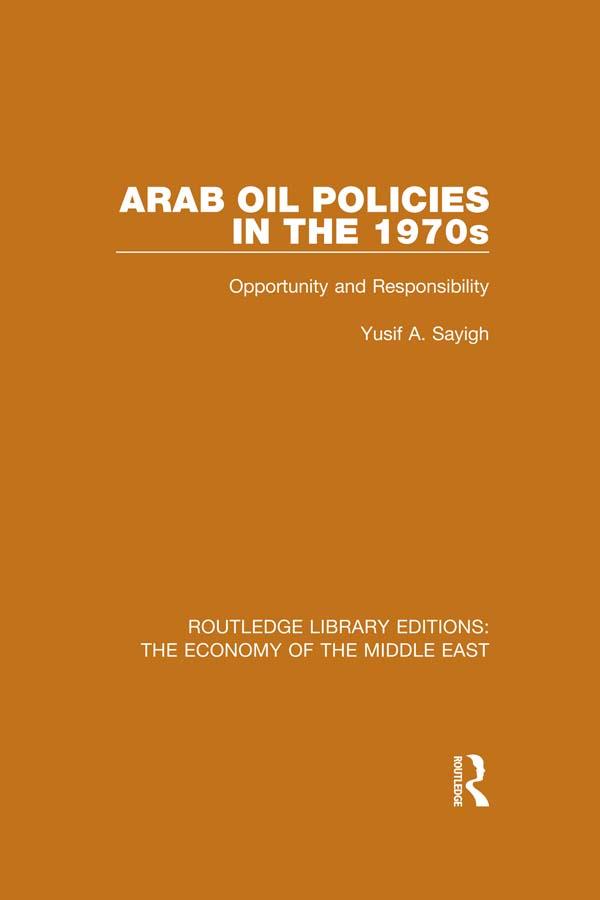
Until 1973 few people, either in the advanced, industrial countries or in the developing countries of the Third World, thought seriously on the issues and complexities involved in the production and marketing of the oil on which they relied. It was only with the sudden steep increases in oil prices that the oil industry became a matter of general discussion, and the Organisation of Petroleum Exporting Countries (OPEC) became a front page topic for analysis and comment. However, real understanding of the organisation and its policies did not accompany this rush of interest and much confusion has followed. In particular, the Arab exporters have received the weight of the criticism although they have only a share in the market and not a monopoly. This book attempts to instil a greater mutual understanding between oil exporters and importers, although it is not a wholesale endorsement of Arab policies, by outlining the major policy areas in this field. It looks at new policy options and their implications in exploration, marketing and pricing and at downstream operations such as the petrochemical and gas industries. In conclusion, this study identifies the wide-ranging opportunities that the new oil policies have opened up for the Arab countries, in the national, regional and international context, and assesses and clarifies the responsibilities which accompany this success.
First published in 1983.
Płać wygodnie kartą, Klarną, Apple Pay lub Google Pay. Nie jesteś zadowolony? Zawsze masz 14-dniową gwarancję zwrotu pieniędzy. Więcej przeczytasz w naszych warunkach. Masz pytania? Napisz do nas na hello@memmo.org.
Memmo ułatwia naukę – gdziekolwiek jesteś na świecie. U nas znajdziesz podręczniki i sprytne narzędzia do nauki w jednym miejscu: streszczenia, quizy, podcasty i fiszki. A do tego Ted, Twój kumpel do nauki, który odpowie na wszystko, co Cię nurtuje. Ponad 50 000 studentów już tu się uczy – stworzone, byś uczył się szybciej i mniej stresował.