
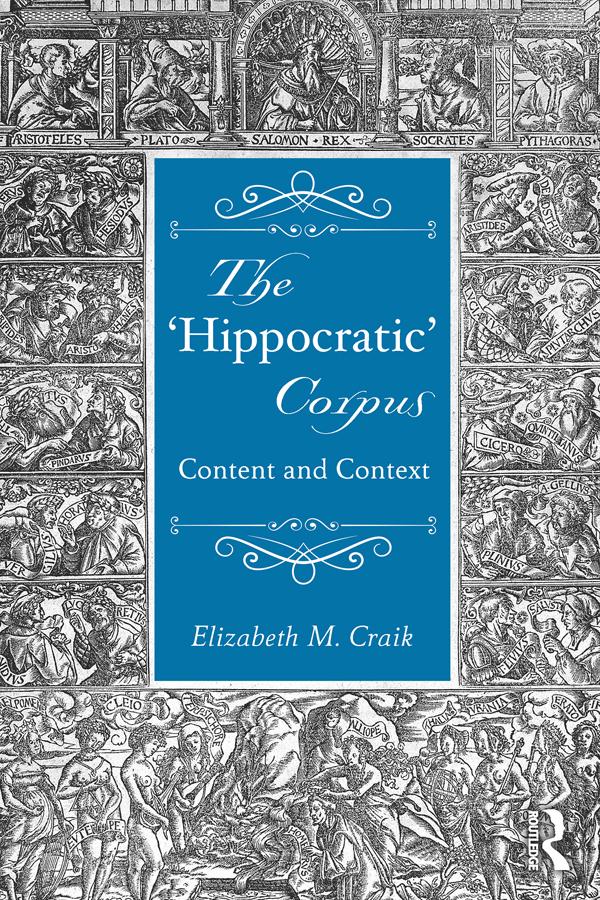
The Hippocratic Corpus comprises some sixty medical works of varying length, style and content. Collectively, this is the largest surviving body of early Greek prose. As such, it is an invaluable resource for scholars and students not only of ancient medicine but also of Greek life in general.
Hippocrates lived in the age of Socrates and most of the treatises seem to originate in the classical period. There is, however, no consensus on Hippocratic attribution. The ‘Hippocratic’ Corpus examines the works individually under the broad headings:
- content - each work is summarised for the reader
- comment - the substance and style of each work is discussed
- context is provided not just in relation to the corpus as a whole but also to the work’s wider relevance.
Whereas the scholar or student approaching, say, Euripides or Herodotus has a wealth of books available to provide introduction and orientation, no such study has existed for the Hippocratic Corpus. As The ‘Hippocratic’ Corpus has a substantial introduction, and as each work is summarised for the reader, it facilitates use and exploration of an important body of evidence by all interested in Greek medicine and society.
Elizabeth Craik is Honorary Professor at University of St Andrews and Visiting Professor at University of Newcastle, UK.
Płać wygodnie kartą, Klarną, Apple Pay lub Google Pay. Nie jesteś zadowolony? Zawsze masz 14-dniową gwarancję zwrotu pieniędzy. Więcej przeczytasz w naszych warunkach. Masz pytania? Napisz do nas na hello@memmo.org.
Memmo ułatwia naukę – gdziekolwiek jesteś na świecie. U nas znajdziesz podręczniki i sprytne narzędzia do nauki w jednym miejscu: streszczenia, quizy, podcasty i fiszki. A do tego Ted, Twój kumpel do nauki, który odpowie na wszystko, co Cię nurtuje. Ponad 50 000 studentów już tu się uczy – stworzone, byś uczył się szybciej i mniej stresował.