
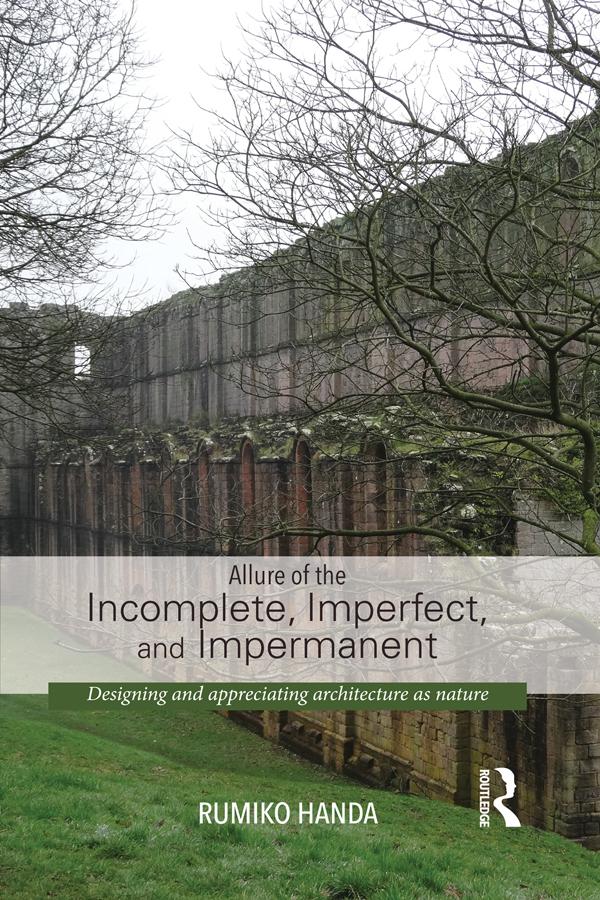
Architects have long operated based on the assumption that a building is 'complete' once construction has finished. Striving to create a perfect building, they wish for it to stay in its original state indefinitely, viewing any subsequent alterations as unintended effects or the results of degeneration. The ideal is for a piece of architecture to remain permanently perfect and complete. This contrasts sharply with reality where changes take place as people move in, requirements change, events happen, and building materials are subject to wear and tear.
Rumiko Handa argues it is time to correct this imbalance. Using examples ranging from the Roman Coliseum to Japanese tea rooms, she draws attention to an area that is usually ignored: the allure of incomplete, imperfect and impermanent architecture. By focusing on what happens to buildings after they are ‘complete’, she shows that the ‘afterlife’ is in fact the very ‘life’ of a building.
However, the book goes beyond theoretical debate. Addressing professionals as well as architecture students and educators, it persuades architects of the necessity to anticipate possible future changes and to incorporate these into their original designs.
Płać wygodnie kartą, Klarną, Apple Pay lub Google Pay. Nie jesteś zadowolony? Zawsze masz 14-dniową gwarancję zwrotu pieniędzy. Więcej przeczytasz w naszych warunkach. Masz pytania? Napisz do nas na hello@memmo.org.
Memmo ułatwia naukę – gdziekolwiek jesteś na świecie. U nas znajdziesz podręczniki i sprytne narzędzia do nauki w jednym miejscu: streszczenia, quizy, podcasty i fiszki. A do tego Ted, Twój kumpel do nauki, który odpowie na wszystko, co Cię nurtuje. Ponad 50 000 studentów już tu się uczy – stworzone, byś uczył się szybciej i mniej stresował.