
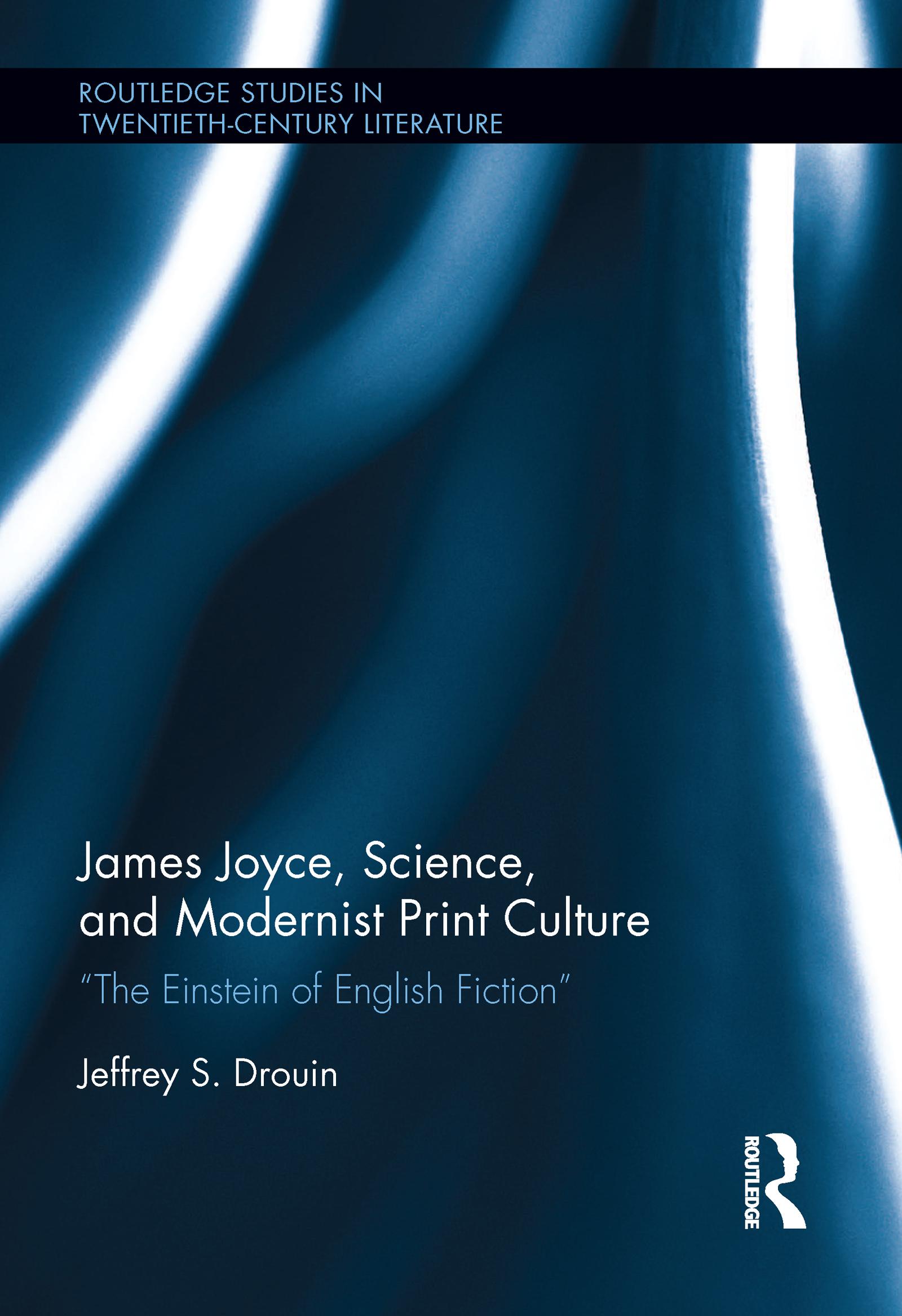
This book makes an important intervention in the ongoing debates about modernism, science, and the divisions of early Twentieth-Century print culture. In order to establish Joyce's place in the nexus of modernism and scientific thought, Drouin uses the methods of periodical studies and textual criticism to examine the impact of Einstein's relativity theories on the development of Ulysses (1922) and Finnegans Wake (1939). Looking at experiments with space, time, motion, and perspective, it rigorously surveys discourse of science and the novel in the print culture networks connected to Joyce, with concrete analysis of avant-garde magazines, newspapers, popular science books, BBC pamphlets, and radio broadcasts between 1914 and 1939. These sources elucidate changes that Joyce made to the manuscripts, typescripts, and page proofs of certain episodes of his final two novels. The new evidence establishes for the first time the nature of the material link between Joyce and non-technical science, and the manner in which Ulysses and Finnegans Wake owe their structure and meaning to the humanistic issues associated with science during the wartime and inter-war years. In examining the relationships between Joyce's later work and the popular science industry, the book elucidates the often conflicting attitudes toward science in inter-war British print culture, filling in a piece of the puzzle that is modernism's relationship to the new physics and, simultaneously, the history of the novel.
Płać wygodnie kartą, Klarną, Apple Pay lub Google Pay. Nie jesteś zadowolony? Zawsze masz 14-dniową gwarancję zwrotu pieniędzy. Więcej przeczytasz w naszych warunkach. Masz pytania? Napisz do nas na hello@memmo.org.
Memmo ułatwia naukę – gdziekolwiek jesteś na świecie. U nas znajdziesz podręczniki i sprytne narzędzia do nauki w jednym miejscu: streszczenia, quizy, podcasty i fiszki. A do tego Ted, Twój kumpel do nauki, który odpowie na wszystko, co Cię nurtuje. Ponad 50 000 studentów już tu się uczy – stworzone, byś uczył się szybciej i mniej stresował.