
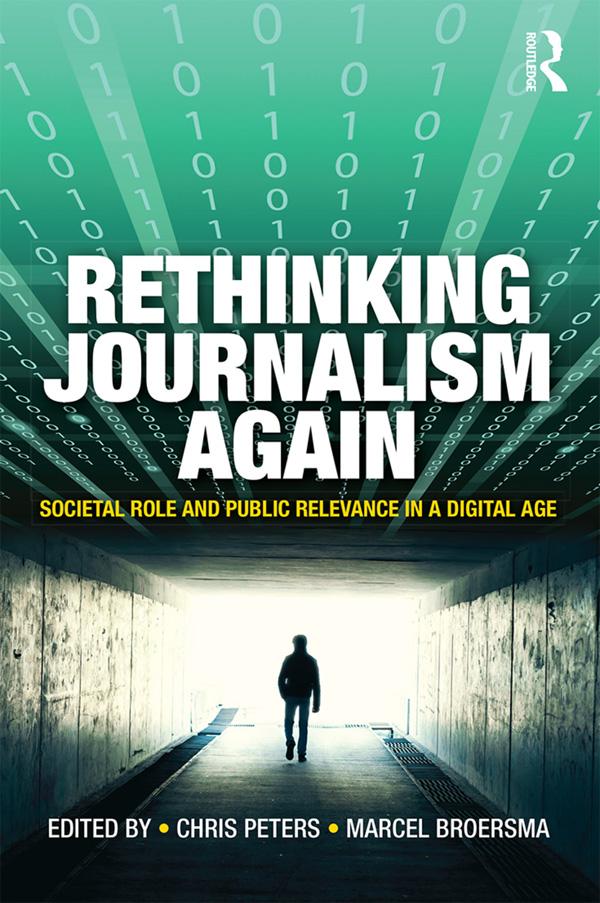
It’s easy to make a rhetorical case for the value of journalism. Because, it is a necessary precondition for democracy; it speaks to the people and for the people; it informs citizens and enables them to make rational decisions; it functions as their watchdog on government and other powers that be.
But does rehashing such familiar rationales bring journalism studies forward? Does it contribute to ongoing discussions surrounding journalism’s viability going forth? For all their seeming self-evidence, this book considers what bearing these old platitudes have in the new digital era. It asks whether such hopeful talk really reflects the concrete roles journalism now performs for people in their everyday lives. In essence, it poses questions that strike at the core of the idea of journalism itself. Is there a singular journalism that has one well-defined role in society? Is its public mandate as strong as we think?
The internationally-renowned scholars comprising the collection address these recurring concerns that have long-defined the profession and which journalism faces even more acutely today. By discussing what journalism was, is, and (possibly) will be, this book highlights key contemporary areas of debate and tackles on-going anxieties about its future.
Płać wygodnie kartą, Klarną, Apple Pay lub Google Pay. Nie jesteś zadowolony? Zawsze masz 14-dniową gwarancję zwrotu pieniędzy. Więcej przeczytasz w naszych warunkach. Masz pytania? Napisz do nas na hello@memmo.org.
Memmo ułatwia naukę – gdziekolwiek jesteś na świecie. U nas znajdziesz podręczniki i sprytne narzędzia do nauki w jednym miejscu: streszczenia, quizy, podcasty i fiszki. A do tego Ted, Twój kumpel do nauki, który odpowie na wszystko, co Cię nurtuje. Ponad 50 000 studentów już tu się uczy – stworzone, byś uczył się szybciej i mniej stresował.