
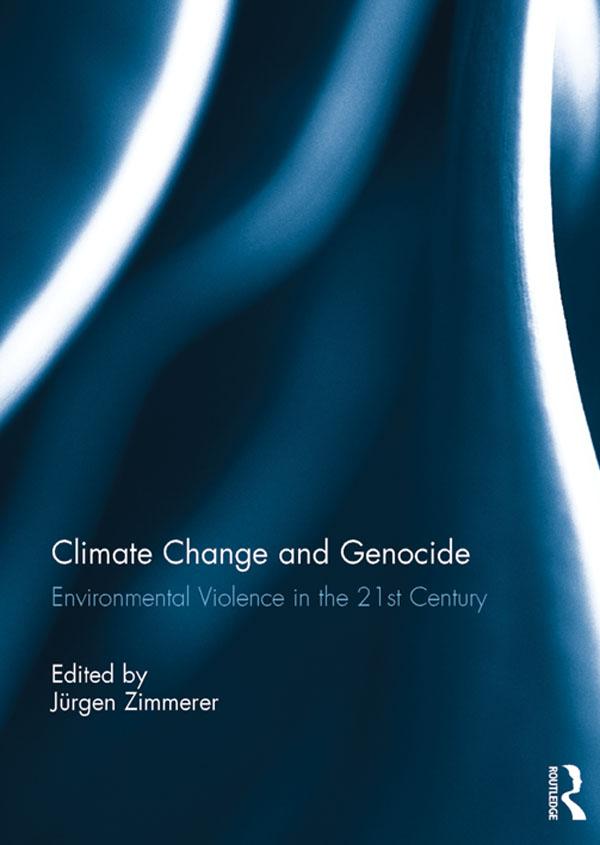
Climate change caused by human activity is the most fundamental challenge facing mankind in the 21st century, since it will drastically alter the living conditions of millions of people, mainly in the Global South. Environmental violence, including resource crises such as peak fossil fuel, will lie at the heart of future conflicts. However, Genocide Studies have so far neglected this subject, due to the emphasis that traditional genocide scholarship places on ideology and legal prosecution, leading to a narrow understanding of the driving forces of genocide.
This books aims at changing this, initiating a dialogue between scholars working in the areas of climate change and genocide. Research into genocide as well as climate change is a highly interdisciplinary endeavour, transcending the boundaries of established disciplines. Contributions to this book address this by approaching the subject from a wide array of methodological, theoretical, disciplinary and regional perspectives. As all the contributions show, climate change is a major threat multiplier for violence or non-violent destruction and any understanding of prevention needs to take this into account. They offer a basis for much needed Critical Prevention Studies, which aims at sustainable prevention.
This book was originally published as a special issue of the International Journal of Human Rights.
Płać wygodnie kartą, Klarną, Apple Pay lub Google Pay. Nie jesteś zadowolony? Zawsze masz 14-dniową gwarancję zwrotu pieniędzy. Więcej przeczytasz w naszych warunkach. Masz pytania? Napisz do nas na hello@memmo.org.
Memmo ułatwia naukę – gdziekolwiek jesteś na świecie. U nas znajdziesz podręczniki i sprytne narzędzia do nauki w jednym miejscu: streszczenia, quizy, podcasty i fiszki. A do tego Ted, Twój kumpel do nauki, który odpowie na wszystko, co Cię nurtuje. Ponad 50 000 studentów już tu się uczy – stworzone, byś uczył się szybciej i mniej stresował.