
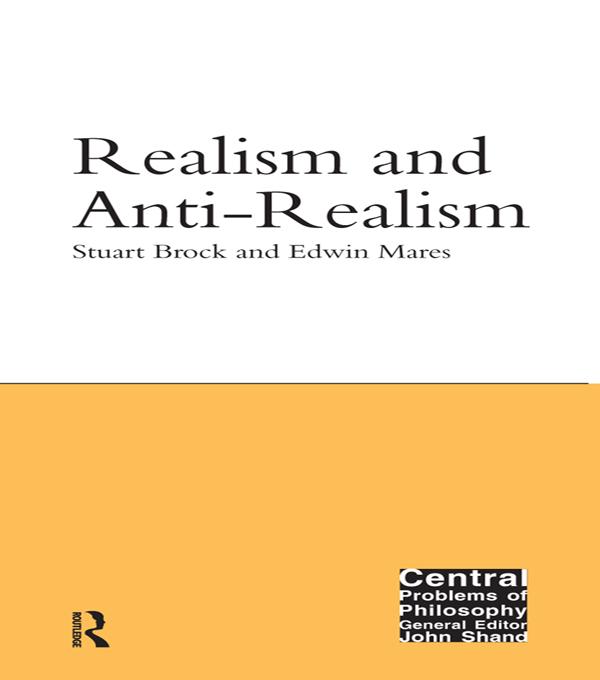
There are a bewildering variety of ways the terms "realism" and "anti-realism" have been used in philosophy and furthermore the different uses of these terms are only loosely connected with one another. Rather than give a piecemeal map of this very diverse landscape, the authors focus on what they see as the core concept: realism about a particular domain is the view that there are facts or entities distinctive of that domain, and their existence and nature is in some important sense objective and mind-independent. The authors carefully set out and explain the different realist and anti-realist positions and arguments that occur in five key domains: science, ethics, mathematics, modality and fictional objects. For each area the authors examine the various styles of argument in support of and against realism and anti-realism, show how these different positions and arguments arise in very different domains, evaluate their success within these fields, and draw general conclusions about these assorted strategies. Error theory, fictionalism, non-cognitivism, relativism and response-dependence are taken as the most important positions in opposition to the realist and these are explored in depth. Suitable for advanced level undergraduates, the book offers readers a clear introduction to a subject central to much contemporary work in metaphysics, epistemology and philosophy of language.
Płać wygodnie kartą, Klarną, Apple Pay lub Google Pay. Nie jesteś zadowolony? Zawsze masz 14-dniową gwarancję zwrotu pieniędzy. Więcej przeczytasz w naszych warunkach. Masz pytania? Napisz do nas na hello@memmo.org.
Memmo ułatwia naukę – gdziekolwiek jesteś na świecie. U nas znajdziesz podręczniki i sprytne narzędzia do nauki w jednym miejscu: streszczenia, quizy, podcasty i fiszki. A do tego Ted, Twój kumpel do nauki, który odpowie na wszystko, co Cię nurtuje. Ponad 50 000 studentów już tu się uczy – stworzone, byś uczył się szybciej i mniej stresował.
Może Ci się spodobać
Kup książkę0