
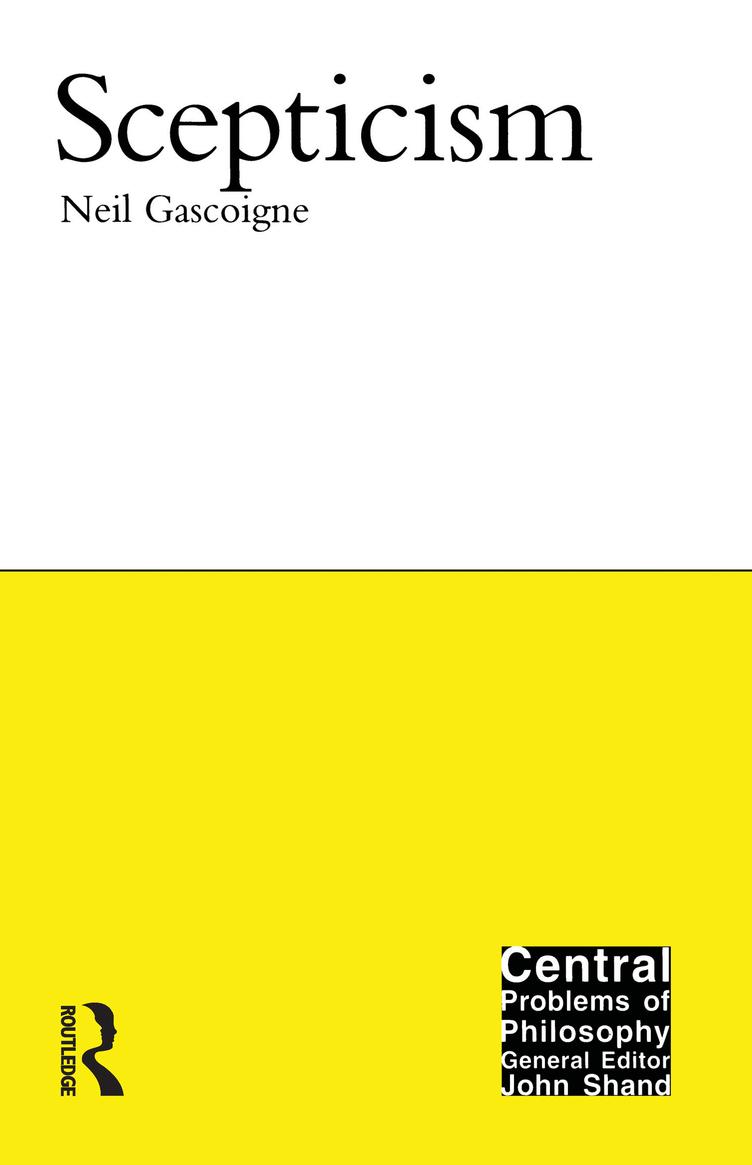
The history of scepticism is assumed by many to be the history of failed responses to a problem first raised by Descartes. While the thought of the ancient sceptics is acknowledged, their principle concern with how to live a good life is regarded as bearing little, if any, relation to the work of contemporary epistemologists. In "Scepticism" Neil Gascoigne engages with the work of canonical philosophers from Descartes, Hume and Kant through to Moore, Austin, and Wittgenstein to show how themes that first emerged in the Hellenistic period are inextricably bound up with the historical development of scepticism. Foremost amongst these is the view that scepticism relates not to the possibility of empirical knowledge but to the possibility of epistemological theory. This challenge to epistemology itself is explored and two contemporary trends are considered: the turn against foundationalist epistemology and towards more naturalistic conceptions of inquiry, and the resistance to this on the part of non-naturalistically inclined philosophers. In contextualizing the debate in this way Gascoigne equips students with a better appreciation of the methodological importance of sceptical reasoning, an analytic understanding of the structure of sceptical arguments, and an awareness of the significance of scepticism to the nature of philosophical inquiry.
Płać wygodnie kartą, Klarną, Apple Pay lub Google Pay. Nie jesteś zadowolony? Zawsze masz 14-dniową gwarancję zwrotu pieniędzy. Więcej przeczytasz w naszych warunkach. Masz pytania? Napisz do nas na hello@memmo.org.
Memmo ułatwia naukę – gdziekolwiek jesteś na świecie. U nas znajdziesz podręczniki i sprytne narzędzia do nauki w jednym miejscu: streszczenia, quizy, podcasty i fiszki. A do tego Ted, Twój kumpel do nauki, który odpowie na wszystko, co Cię nurtuje. Ponad 50 000 studentów już tu się uczy – stworzone, byś uczył się szybciej i mniej stresował.