
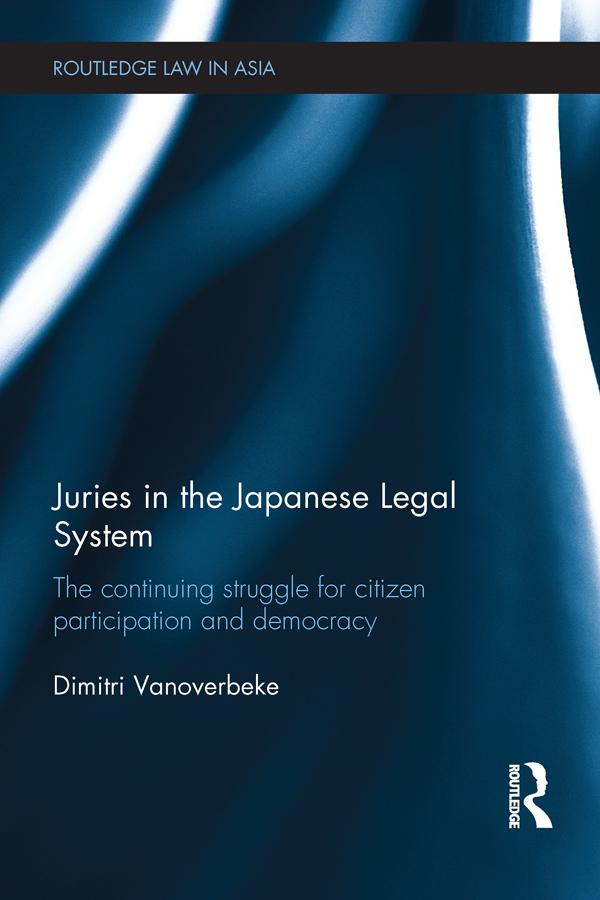
Trial by jury is not a fundamental part of the Japanese legal system, but there has been a recent important move towards this with the introduction in 2009 of the lay assessor system whereby lay people sit with judges in criminal trials. This book considers the debates in Japan which surround this development. It examines the political and socio-legal contexts, contrasting the view that the participation of ordinary citizens in criminal trials is an important manifestation of democracy, with the view that Japan as a society where authority is highly venerated is not natural territory for a system where lay people are likely to express views at odds with expert judges. It discusses Japan’s earlier experiments with jury trials in the late 19th Century, the period 1923-43, and up to 1970 in US-controlled Okinawa, compares developing views in Japan on this issue with views in other countries, where dissatisfaction with the jury system is often evident, and concludes by assessing how the new system in Japan is working out and how it is likely to develop.
Płać wygodnie kartą, Klarną, Apple Pay lub Google Pay. Nie jesteś zadowolony? Zawsze masz 14-dniową gwarancję zwrotu pieniędzy. Więcej przeczytasz w naszych warunkach. Masz pytania? Napisz do nas na hello@memmo.org.
Memmo ułatwia naukę – gdziekolwiek jesteś na świecie. U nas znajdziesz podręczniki i sprytne narzędzia do nauki w jednym miejscu: streszczenia, quizy, podcasty i fiszki. A do tego Ted, Twój kumpel do nauki, który odpowie na wszystko, co Cię nurtuje. Ponad 50 000 studentów już tu się uczy – stworzone, byś uczył się szybciej i mniej stresował.