
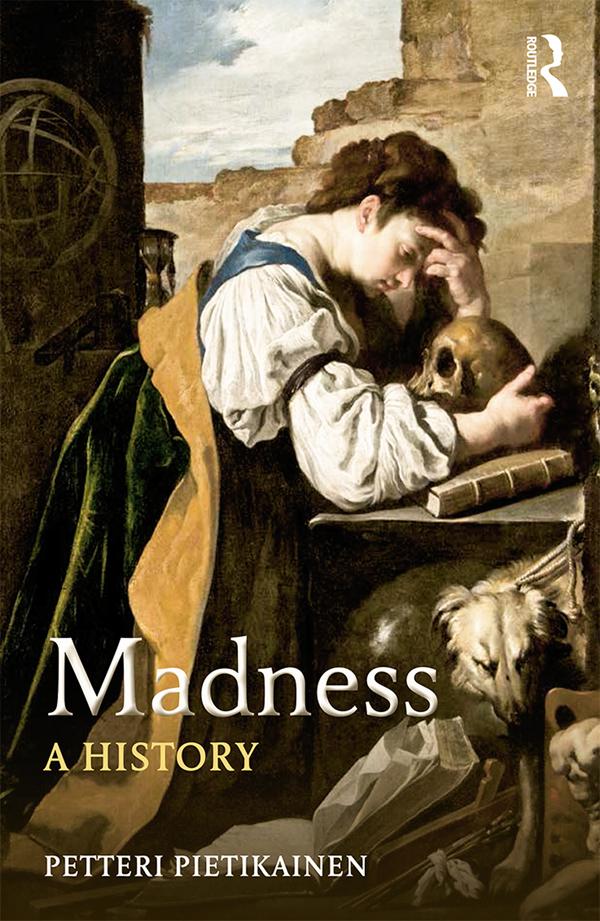
Madness: A History is a thorough and accessible account of madness from antiquity to modern times, offering a large-scale yet nuanced picture of mental illness and its varieties in western civilization.
The book opens by considering perceptions and experiences of madness starting in Biblical times, Ancient history and Hippocratic medicine to the Age of Enlightenment, before moving on to developments from the late 18th century to the late 20th century and the Cold War era. Petteri Pietikäinen looks at issues such as 18th century asylums, the rise of psychiatry, the history of diagnoses, the experiences of mental health patients, the emergence of neuroses, the impact of eugenics, the development of different treatments, and the late 20th century emergence of anti-psychiatry and the modern malaise of the worried well. The book examines the history of madness at the different levels of micro-, meso- and macro: the social and cultural forces shaping the medical and lay perspectives on madness, the invention and development of diagnoses as well as the theories and treatment methods by physicians, and the patient experiences inside and outside of the mental institution.
Drawing extensively from primary records written by psychiatrists and accounts by mental health patients themselves, it also gives readers a thorough grounding in the secondary literature addressing the history of madness. An essential read for all students of the history of mental illness, medicine and society more broadly.
Płać wygodnie kartą, Klarną, Apple Pay lub Google Pay. Nie jesteś zadowolony? Zawsze masz 14-dniową gwarancję zwrotu pieniędzy. Więcej przeczytasz w naszych warunkach. Masz pytania? Napisz do nas na hello@memmo.org.
Memmo ułatwia naukę – gdziekolwiek jesteś na świecie. U nas znajdziesz podręczniki i sprytne narzędzia do nauki w jednym miejscu: streszczenia, quizy, podcasty i fiszki. A do tego Ted, Twój kumpel do nauki, który odpowie na wszystko, co Cię nurtuje. Ponad 50 000 studentów już tu się uczy – stworzone, byś uczył się szybciej i mniej stresował.