
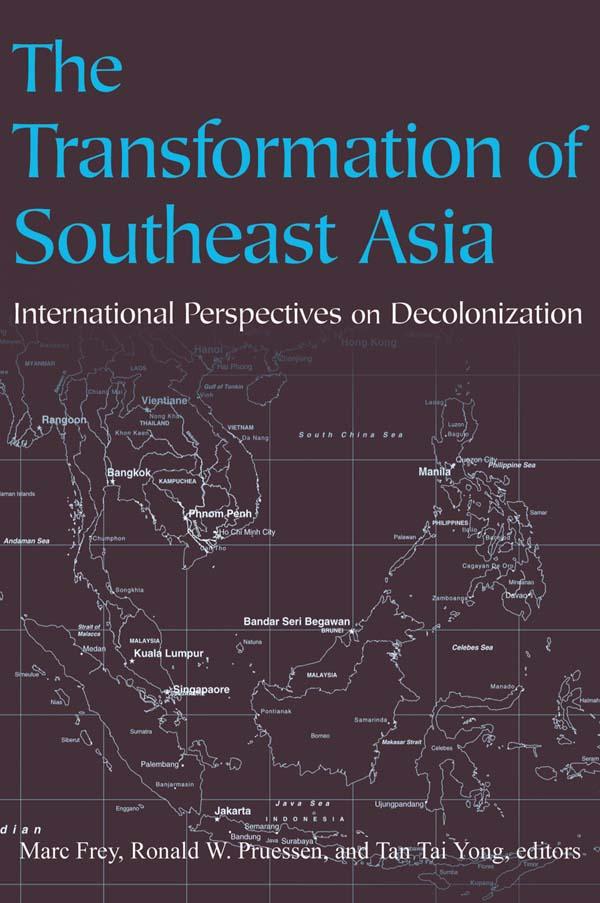
This book provides the basis for a reconceptualization of key features in Southeast Asia's history. Scholars from Europe, America, and Asia examine evolutionary patterns of Europe's and Japan's Southeast Asian empires from the late nineteenth century through World War II, and offer important insights into the specific events of the 1940s, 1950s, and 1960s. In turn, their different perspectives on the political, economic, and cultural currents of the "post-colonial" era - including Southeast Asia's gradual adjustment to globalizing forces - enhance understanding of the dynamics of the decolonization process. Drawing on new and wide-ranging research in international relations, economics, anthropology, and cultural studies, the book looks at the impact of decolonization and the struggle of the new nation-states with issues such as economic development, cultural development, nation-building, ideology, race, and modernization. The contributors also consider decolonization as a phenomenon within the larger international structure of the Cold War and the post-Cold War eras.
Płać wygodnie kartą, Klarną, Apple Pay lub Google Pay. Nie jesteś zadowolony? Zawsze masz 14-dniową gwarancję zwrotu pieniędzy. Więcej przeczytasz w naszych warunkach. Masz pytania? Napisz do nas na hello@memmo.org.
Memmo ułatwia naukę – gdziekolwiek jesteś na świecie. U nas znajdziesz podręczniki i sprytne narzędzia do nauki w jednym miejscu: streszczenia, quizy, podcasty i fiszki. A do tego Ted, Twój kumpel do nauki, który odpowie na wszystko, co Cię nurtuje. Ponad 50 000 studentów już tu się uczy – stworzone, byś uczył się szybciej i mniej stresował.
Może Ci się spodobać
Kup książkę0