
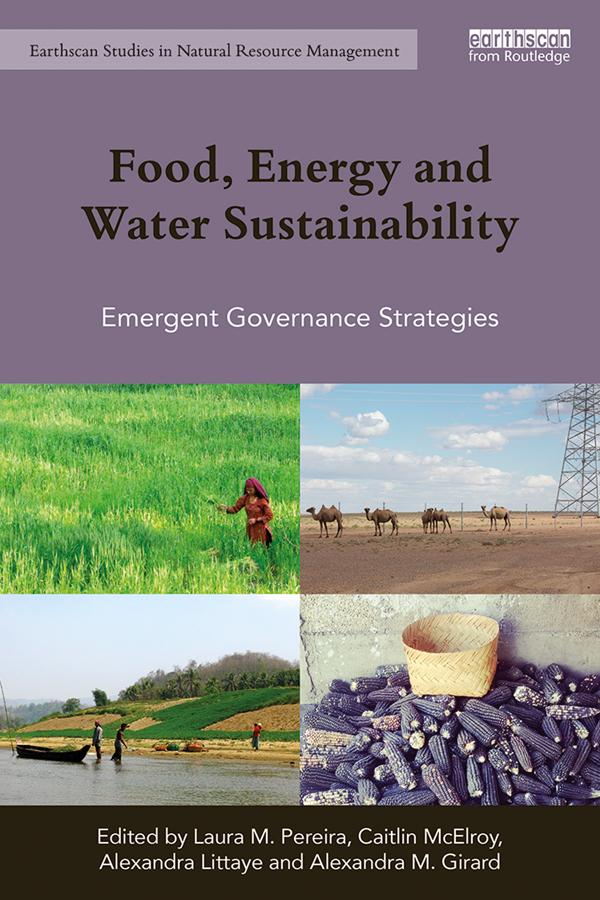
Societies around the world face an increasingly uncertain future as social and ecological changes create pressure on resource governance, and this uncertainty calls for new models that illuminate the intersections of civil society, public sector, and private sector resource management. This volume presents a diversity of collaborations between various governance actors in the management of the Food-Energy-Water (FEW) nexus. It analyses the ability of emergent governance structures to cope with the complexity of future challenges across FEW systems.
Divided into two sections, chapters in the first half of the book present a collection of case studies from around the world exemplifying how FEW nexus challenges are addressed in a multitude of ways and by a variety of actors. Chapters in the second half offer broader perspectives on the management of FEW and underline the lessons that emerge from applying a FEW lens to the question of natural resource governance.
The varied examples in this book highlight that the management of FEW is often a question of reinventing, adapting, and building upon existing practices. Such practices are deeply embedded in unique socio-cultural, environmental, and political contexts as well as ‘hard’ infrastructures. Most of all, this edited volume seeks to communicate the wealth of ideas from committed individuals who continue to work to improve natural resource governance and our sustainable futures.
Płać wygodnie kartą, Klarną, Apple Pay lub Google Pay. Nie jesteś zadowolony? Zawsze masz 14-dniową gwarancję zwrotu pieniędzy. Więcej przeczytasz w naszych warunkach. Masz pytania? Napisz do nas na hello@memmo.org.
Memmo ułatwia naukę – gdziekolwiek jesteś na świecie. U nas znajdziesz podręczniki i sprytne narzędzia do nauki w jednym miejscu: streszczenia, quizy, podcasty i fiszki. A do tego Ted, Twój kumpel do nauki, który odpowie na wszystko, co Cię nurtuje. Ponad 50 000 studentów już tu się uczy – stworzone, byś uczył się szybciej i mniej stresował.