
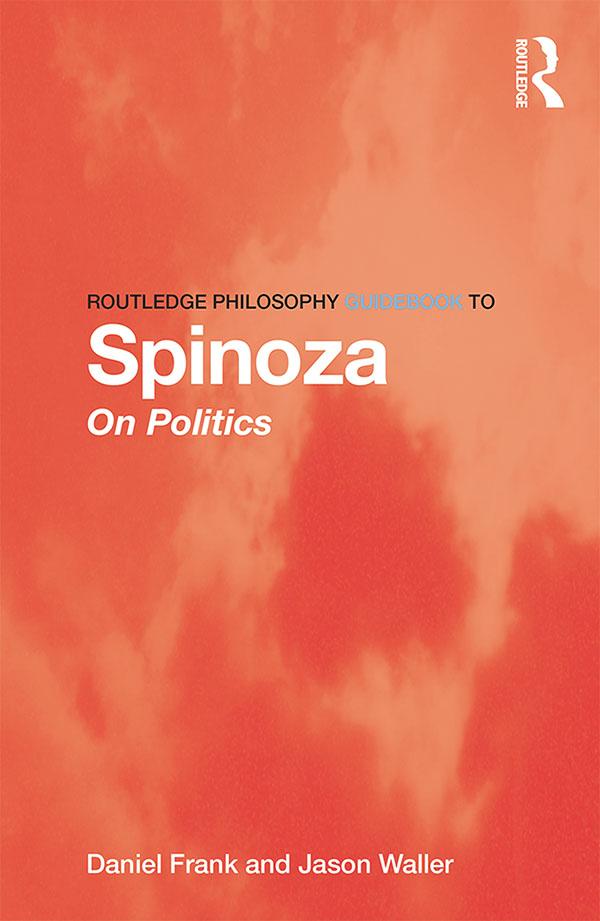
Baruch Spinoza is one of the most influential and controversial political philosophers of the early modern period. Though best-known for his contributions to metaphysics, Spinoza’s Theological-Political Treatise (1670) and his unfinished Political Treatise (1677) were widely debated and helped to shape the political writings of philosophers as diverse as Rousseau, Kant, Marx, Nietzsche, and (although he publicly denied it) even Locke. In addition to its enormous historical importance, Spinoza’s political philosophy is also strikingly contemporary in its advocacy of toleration of unpopular religious and political views and his concern with stabilizing religiously diverse democratic societies.
The first Guidebook to Spinoza’s political writings, The Routledge Philosophy Guidebook to Spinoza on Politics covers the following key points:
- Spinoza’s life and the background to his philosophy
- the key themes and arguments of the Theological-Political-Treatise and Political Treatise
- the continuing importance of Spinoza’s work to philosophy.
This book is an ideal starting point for anyone new to Spinoza and essential reading for students of political philosophy and seventeenth-century philosophy.
Płać wygodnie kartą, Klarną, Apple Pay lub Google Pay. Nie jesteś zadowolony? Zawsze masz 14-dniową gwarancję zwrotu pieniędzy. Więcej przeczytasz w naszych warunkach. Masz pytania? Napisz do nas na hello@memmo.org.
Memmo ułatwia naukę – gdziekolwiek jesteś na świecie. U nas znajdziesz podręczniki i sprytne narzędzia do nauki w jednym miejscu: streszczenia, quizy, podcasty i fiszki. A do tego Ted, Twój kumpel do nauki, który odpowie na wszystko, co Cię nurtuje. Ponad 50 000 studentów już tu się uczy – stworzone, byś uczył się szybciej i mniej stresował.