
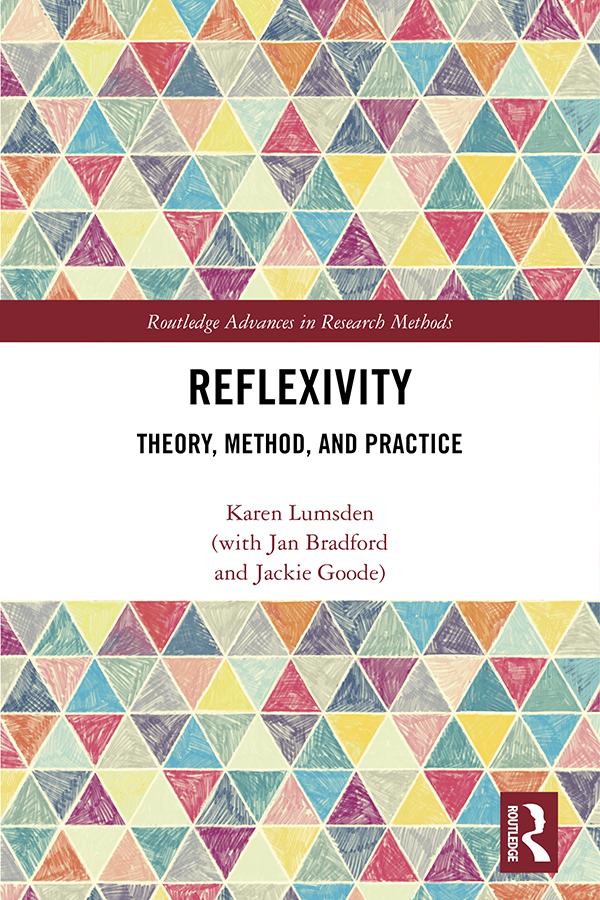
Reflexivity is valuable in social research because it draws attention to the researcher as part of the world being studied and reminds us that the individuals involved in our research are subjects, not objects. By being reflexive we acknowledge that we cannot be separated from our biographies.
This volume reviews key debates concerning reflexivity in theory, methods, and practice. It mounts a defence of reflexivity against new materialist and post-qualitative critiques and the pressures exerted on scholars from the neoliberal marketized university system which privileges fast academia at the expense of slow, reflective scholarship. While defending reflexivity, this book also those identifies issues which plague mainstream sociological operationalizations of a positivistic form of reflexivity. It argues for the extension of reflexivity into domains otherwise neglected in public accounts, and a shift from reflexivity as an individualized quality of the researcher (used to judge peers and navel-gaze) to a feminist, collaborative, reflexive sensibility which is mindful of the wider contexts shaping the construction of knowledge(s), experience(s), and of the role of research communities.
Providing examples of reflexivity in action from academics at different stages of their careers, Reflexivity will appeal to students and researchers interested in fields such as Sociology, Qualitative Research Methods, Criminology, Ethnography, and Ethics of Research.
Płać wygodnie kartą, Klarną, Apple Pay lub Google Pay. Nie jesteś zadowolony? Zawsze masz 14-dniową gwarancję zwrotu pieniędzy. Więcej przeczytasz w naszych warunkach. Masz pytania? Napisz do nas na hello@memmo.org.
Memmo ułatwia naukę – gdziekolwiek jesteś na świecie. U nas znajdziesz podręczniki i sprytne narzędzia do nauki w jednym miejscu: streszczenia, quizy, podcasty i fiszki. A do tego Ted, Twój kumpel do nauki, który odpowie na wszystko, co Cię nurtuje. Ponad 50 000 studentów już tu się uczy – stworzone, byś uczył się szybciej i mniej stresował.