
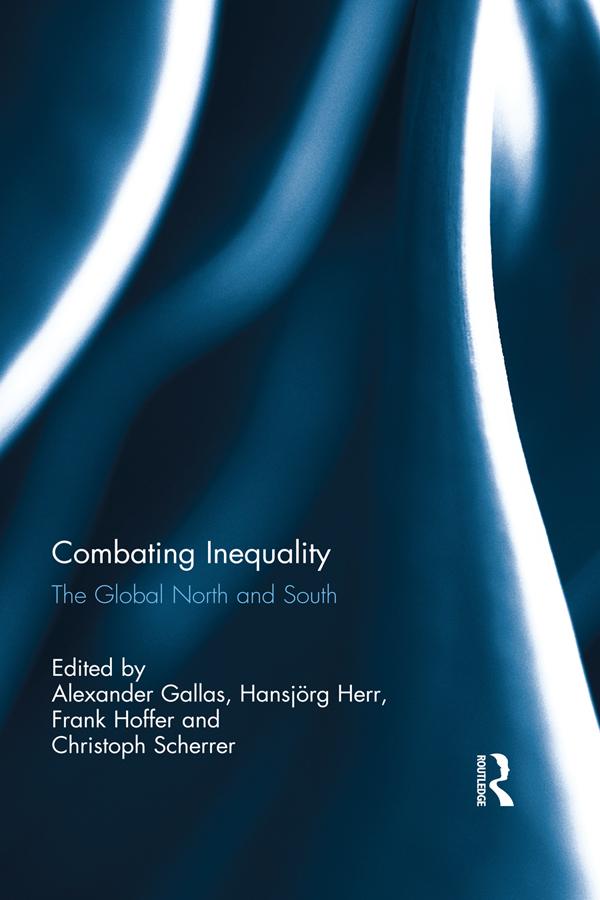
Economic inequality has recently gained considerable academic attention. However, two important aspects of inequality have not been discussed systematically: its multidimensional nature and the question of what can be done to reverse it. This book offers insights from scholars representing the Global Labour University, which operates in Brazil, Germany, India, South Africa and the US. They analyse the various drivers of inequality, assess policy responses, and discuss counterstrategies.
The main findings of this book are that rising levels of inequality cannot be addressed only with the standard policies responses, namely education, redistribution and ‘green growth’. In addition, the way markets currently function needs to be corrected. The chapters in this volume focus on specific fields of contemporary capitalism where important drivers of inequality are located, for example, the labour market; the financial system; the tax system; multi-national corporations; and gender relations. Other chapters discuss in detail where political opportunities for change lie. They critically assess existing countermeasures; the idea of a ‘green economy’ and its implications for inequality; and existing campaigns by trade unions and new social movements against inequality. In line with the global nature of the problem, this book contains case studies on countries both from the north and south with considerable economic and political weight.
This book provides academics, political practitioners and civil society activists with a range of ideas on how to drive back inequality. It will be of interest to those who study political economy, development economy and labour economics.
Płać wygodnie kartą, Klarną, Apple Pay lub Google Pay. Nie jesteś zadowolony? Zawsze masz 14-dniową gwarancję zwrotu pieniędzy. Więcej przeczytasz w naszych warunkach. Masz pytania? Napisz do nas na hello@memmo.org.
Memmo ułatwia naukę – gdziekolwiek jesteś na świecie. U nas znajdziesz podręczniki i sprytne narzędzia do nauki w jednym miejscu: streszczenia, quizy, podcasty i fiszki. A do tego Ted, Twój kumpel do nauki, który odpowie na wszystko, co Cię nurtuje. Ponad 50 000 studentów już tu się uczy – stworzone, byś uczył się szybciej i mniej stresował.