
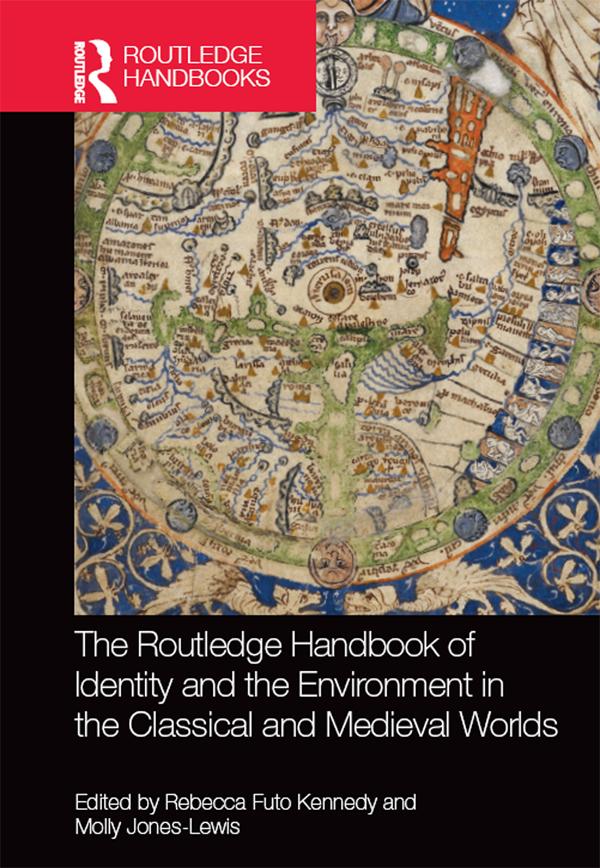
The Routledge Handbook of Identity and the Environment in the Classical and Medieval Worlds explores how environment was thought to shape ethnicity and identity, discussing developments in early natural philosophy and historical ethnographies. Defining ‘environment’ broadly to include not only physical but also cultural environments, natural and constructed, the volume considers the multifarious ways in which environment was understood to shape the culture and physical characteristics of peoples, as well as how the ancients manipulated their environments to achieve a desired identity. This diverse collection includes studies not only of the Greco-Roman world, but also ancient China and the European, Jewish and Arab inheritors and transmitters of classical thought.
In recent years, work in this subject has been confined mostly to the discussion of texts that reflect an approach to the barbarian as ‘other’. The Routledge Handbook of Identity and the Environment in the Classical and Medieval Worlds takes the discussion of ethnicity on a fresh course, contextualising the concept of the barbarian within rational discourses such as cartography, medicine, and mathematical sciences, an approach that allows us to more clearly discern the varied and nuanced approaches to ethnic identity which abounded in antiquity. The innovative and thought-provoking material in this volume realises new directions in the study of identity in the Classical and Medieval worlds.
Płać wygodnie kartą, Klarną, Apple Pay lub Google Pay. Nie jesteś zadowolony? Zawsze masz 14-dniową gwarancję zwrotu pieniędzy. Więcej przeczytasz w naszych warunkach. Masz pytania? Napisz do nas na hello@memmo.org.
Memmo ułatwia naukę – gdziekolwiek jesteś na świecie. U nas znajdziesz podręczniki i sprytne narzędzia do nauki w jednym miejscu: streszczenia, quizy, podcasty i fiszki. A do tego Ted, Twój kumpel do nauki, który odpowie na wszystko, co Cię nurtuje. Ponad 50 000 studentów już tu się uczy – stworzone, byś uczył się szybciej i mniej stresował.