
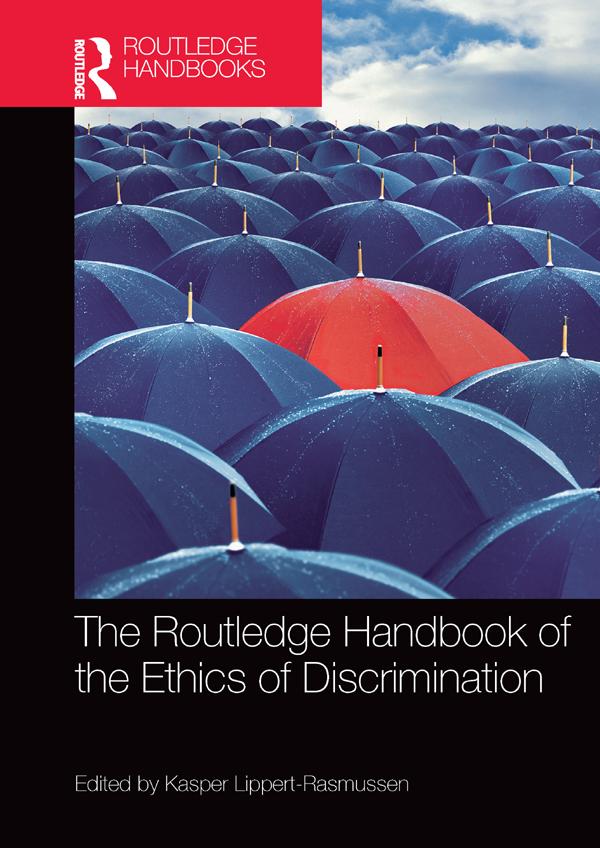
While it has many connections to other topics in normative and applied ethics, discrimination is a central subject in philosophy in its own right. It plays a significant role in relation to many real-life complaints about unjust treatment or unjust inequalities, and it raises a number of questions in political and moral philosophy, and in legal theory. Some of these questions include: what distinguishes the concept of discrimination from the concept of differential treatment? What distinguishes direct from indirect discrimination? Is discrimination always morally wrong? What makes discrimination wrong? How should we eliminate the effects of discrimination? By covering a wide range of topics, and by doing so in a way that does not assume prior acquaintance, this handbook enables the reader to get to grips with the omnipresent issue.
The Routledge Handbook of the Ethics of Discrimination is an outstanding reference source to this exciting subject and the first collection of its kind. Comprising over thirty chapters by a team of international contributors the handbook is divided into six main parts:
• conceptual issues
• the wrongness of discrimination
• groups of ‘discriminatees’
• sites of discrimination
• causes and means
• history of discrimination.
Essential reading for students and researchers in applied ethics and political philosophy the handbook will also be very useful for those in related fields, such as law, sociology and politics.
Płać wygodnie kartą, Klarną, Apple Pay lub Google Pay. Nie jesteś zadowolony? Zawsze masz 14-dniową gwarancję zwrotu pieniędzy. Więcej przeczytasz w naszych warunkach. Masz pytania? Napisz do nas na hello@memmo.org.
Memmo ułatwia naukę – gdziekolwiek jesteś na świecie. U nas znajdziesz podręczniki i sprytne narzędzia do nauki w jednym miejscu: streszczenia, quizy, podcasty i fiszki. A do tego Ted, Twój kumpel do nauki, który odpowie na wszystko, co Cię nurtuje. Ponad 50 000 studentów już tu się uczy – stworzone, byś uczył się szybciej i mniej stresował.