
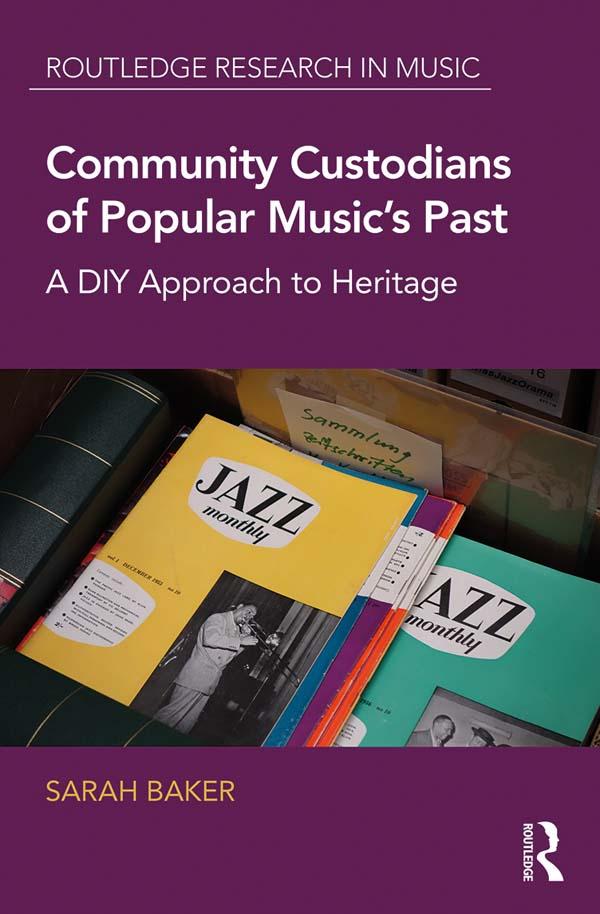
This book examines do-it-yourself (DIY) approaches to the collection, preservation, and display of popular music heritage being undertaken by volunteers in community archives, museums and halls of fame globally. DIY institutions of popular music heritage are much more than ‘unofficial’ versions of ‘official’ institutions; rather, they invoke a complex network of affect and sociality, and are sites where interested people – often enthusiasts – are able to assemble around shared goals related to the preservation of and ownership over the material histories of popular music culture. Drawing on interviews and observations with founders, volunteers and heritage workers in 23 DIY institutions in Australasia, Europe and North America, the book highlights the potentialities of bottom-up, community-based interventions into the archiving and preservation of popular music’s material history. It reveals the kinds of collections being housed in these archives, how they are managed and maintained, and explores their relationship to mainstream heritage institutions. The study also considers the cultural labor of volunteers in the DIY institution, arguing that while these are places concerned with heritage management and the preservation of artefacts, they are also extensions of musical communities in the present in which activities around popular music preservation have personal, cultural, community and heritage benefits. By looking at volunteers’ everyday interventions in the archiving and curating of popular music’s material past, the book highlights how DIY institutions build upon national heritage strategies at the community level and have the capacity to contribute to the democratization of popular music heritage. This book will have a broad appeal to a range of scholars in the fields of popular music studies, musicology, ethnomusicology, archive studies and archival science, museum studies, critical heritage studies, cultural studies, cultural sociology and media studies.
Płać wygodnie kartą, Klarną, Apple Pay lub Google Pay. Nie jesteś zadowolony? Zawsze masz 14-dniową gwarancję zwrotu pieniędzy. Więcej przeczytasz w naszych warunkach. Masz pytania? Napisz do nas na hello@memmo.org.
Memmo ułatwia naukę – gdziekolwiek jesteś na świecie. U nas znajdziesz podręczniki i sprytne narzędzia do nauki w jednym miejscu: streszczenia, quizy, podcasty i fiszki. A do tego Ted, Twój kumpel do nauki, który odpowie na wszystko, co Cię nurtuje. Ponad 50 000 studentów już tu się uczy – stworzone, byś uczył się szybciej i mniej stresował.