
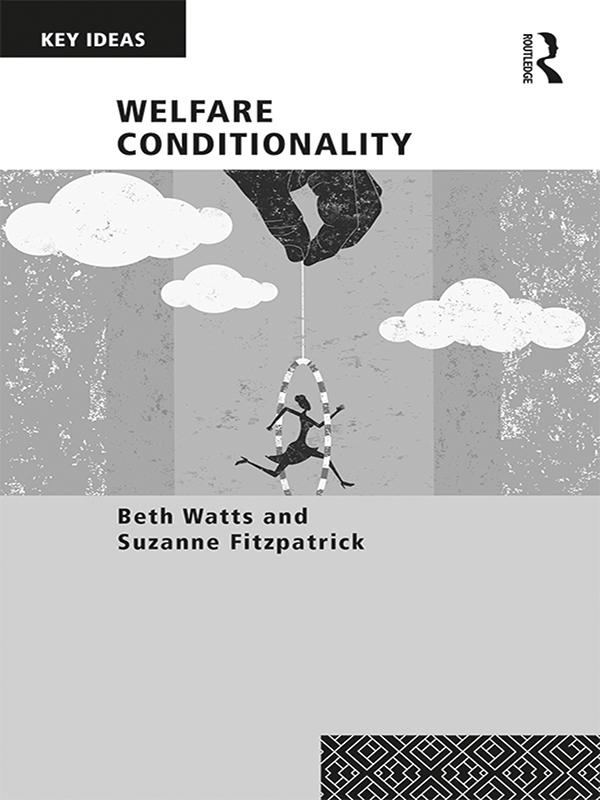
Welfare conditionality has become an idea of global significance in recent years. A ‘hot topic’ in North America, Australia, and across Europe, it has been linked to austerity politics, and the rise of foodbanks and destitution. In the Global South, where publicly funded welfare protection systems are often absent, conditional approaches have become a key tool employed by organisations pursuing human development goals.
The essence of welfare conditionality lies in requirements for people to behave in prescribed ways in order to access cash benefits or other welfare support. These conditions are typically enforced through benefit ‘sanctions’ of various kinds, reflecting a new vision of ‘welfare’, focused more on promoting ‘pro-social’ behaviour than on protecting people against classic ‘social risks’ like unemployment.
This new book in Routledge’s Key Ideas series charts the rise of behavioural conditionality in welfare systems across the globe, its appeal to politicians of Right and Left, and its application to a growing range of social problems. Crucially it explores why, in the context of widespread use of conditional approaches as well as apparently strong public support, both the efficacy and the ethics of welfare conditionality remain so controversial. As such, Welfare Conditionality is essential reading for students, researchers, and commentators in social and public policy, as well as those designing and implementing welfare policies.
Płać wygodnie kartą, Klarną, Apple Pay lub Google Pay. Nie jesteś zadowolony? Zawsze masz 14-dniową gwarancję zwrotu pieniędzy. Więcej przeczytasz w naszych warunkach. Masz pytania? Napisz do nas na hello@memmo.org.
Memmo ułatwia naukę – gdziekolwiek jesteś na świecie. U nas znajdziesz podręczniki i sprytne narzędzia do nauki w jednym miejscu: streszczenia, quizy, podcasty i fiszki. A do tego Ted, Twój kumpel do nauki, który odpowie na wszystko, co Cię nurtuje. Ponad 50 000 studentów już tu się uczy – stworzone, byś uczył się szybciej i mniej stresował.