
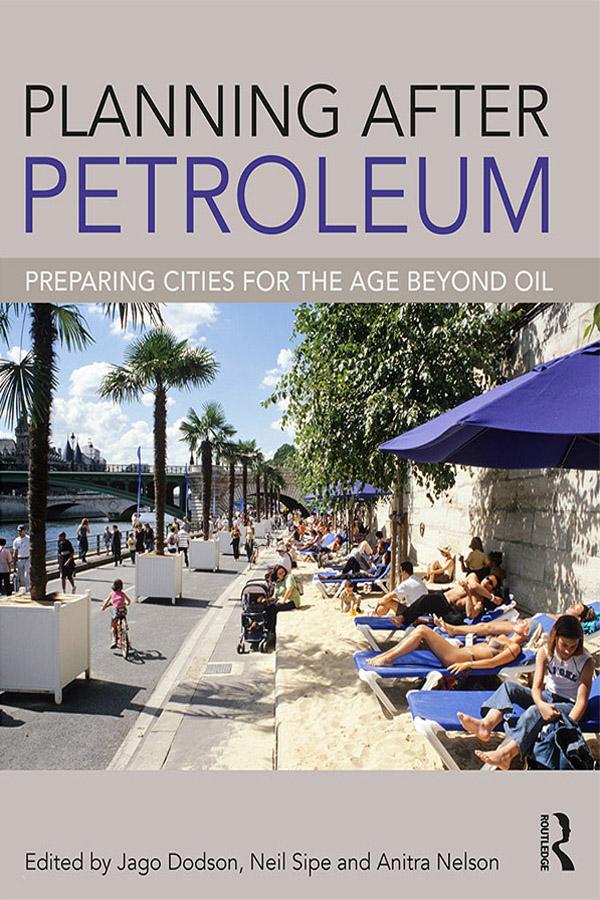
The past decade has been one of the most volatile periods in global petroleum markets in living memory, and future oil supply security and price levels remain highly uncertain. This poses many questions for the professional activities of planners and urbanists because contemporary cities are highly dependent on petroleum as a transport fuel. How will oil dependent cities respond, and adapt to, the changing pattern of petroleum supplies? What key strategies should planners and policy makers implement in petroleum vulnerable cities to address the challenges of moving beyond oil? How might a shift away from petroleum provide opportunities to improve or remake cities for the economic, social and environmental imperatives of twenty-first-century sustainability?
Such questions are the focus of contributors to this book with perspectives ranging across the planning challenge: overarching petroleum futures, governance, transition and climate change questions, the role of various urban transport nodes and household responses, ways of measuring oil vulnerability, and the effects on telecommunications, ports and other urban infrastructure. This comprehensive volume – with contributions from and focusing on cities in Australia, the UK, the US, France, Germany, the Netherlands and South Korea – provides key insights to enable cities to plan for the age beyond petroleum.
Płać wygodnie kartą, Klarną, Apple Pay lub Google Pay. Nie jesteś zadowolony? Zawsze masz 14-dniową gwarancję zwrotu pieniędzy. Więcej przeczytasz w naszych warunkach. Masz pytania? Napisz do nas na hello@memmo.org.
Memmo ułatwia naukę – gdziekolwiek jesteś na świecie. U nas znajdziesz podręczniki i sprytne narzędzia do nauki w jednym miejscu: streszczenia, quizy, podcasty i fiszki. A do tego Ted, Twój kumpel do nauki, który odpowie na wszystko, co Cię nurtuje. Ponad 50 000 studentów już tu się uczy – stworzone, byś uczył się szybciej i mniej stresował.