
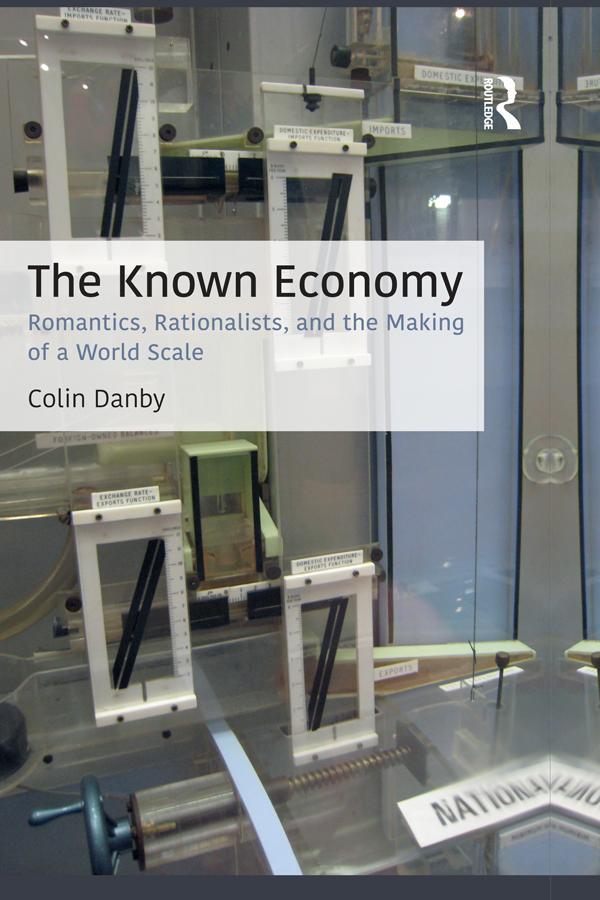
Why do critics and celebrants of globalization concur that international trade and finance represent an inexorable globe-bestriding force with a single logic? The Known Economy shows that both camps rest on the same ideas about how the world is scaled. Two centuries ago romantic and rationalist theorists concurred that the world was divided into discrete nations, moving at different rates toward a "modernity", split between love and money. Though differing over whether this history is tragedy or triumph, they united in projecting an empty "international" space in which a Moloch-like global capitalism could lurk.
The Known Economy tracks the colonial development of national accounting and re-examines the ways gender and heteronormativity are built in to economic representation. It re-interprets the post-WWII spread of standardized economic statistics as the project of international organizations looking over the shoulders of national governments, rather than the expanding power of national governments over populations.
Płać wygodnie kartą, Klarną, Apple Pay lub Google Pay. Nie jesteś zadowolony? Zawsze masz 14-dniową gwarancję zwrotu pieniędzy. Więcej przeczytasz w naszych warunkach. Masz pytania? Napisz do nas na hello@memmo.org.
Memmo ułatwia naukę – gdziekolwiek jesteś na świecie. U nas znajdziesz podręczniki i sprytne narzędzia do nauki w jednym miejscu: streszczenia, quizy, podcasty i fiszki. A do tego Ted, Twój kumpel do nauki, który odpowie na wszystko, co Cię nurtuje. Ponad 50 000 studentów już tu się uczy – stworzone, byś uczył się szybciej i mniej stresował.