
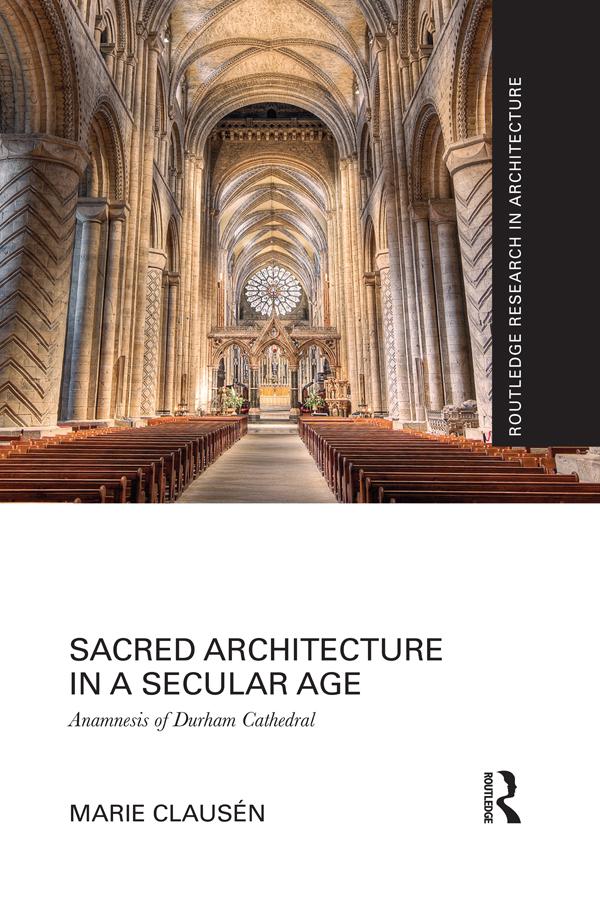
Having won more than one recent poll as Britain’s best-loved building, the appeal of Durham Cathedral appears abiding, which begs the question whether an iconic sacred building can retain meaning and affective pertinence for contemporary, secular visitors. Using the example of Durham Cathedral, this book sets out to explore wherein the appeal of historic churches lies today and considers questions of how and why their preservation into a post-Christian era should be secured.
By including feedback from visitors to the cathedral, and the author’s own very personal account of the cathedral in the form of an ekphrasis, this work seeks to privilege an interpretation of architecture that is based on the individual experience rather than on more conventional narratives of architecture history and cultural heritage policy. Recognising the implication of our choice of narrative on the perceived value of historic churches is crucial when deliberating their future role.
This book puts forth a compelling case for historical sacred architecture, suggesting that its loss - through imperceptive conservation practices as much as through neglect or demolition - would diminish us all, secularists, atheists and agnostics included.
Płać wygodnie kartą, Klarną, Apple Pay lub Google Pay. Nie jesteś zadowolony? Zawsze masz 14-dniową gwarancję zwrotu pieniędzy. Więcej przeczytasz w naszych warunkach. Masz pytania? Napisz do nas na hello@memmo.org.
Memmo ułatwia naukę – gdziekolwiek jesteś na świecie. U nas znajdziesz podręczniki i sprytne narzędzia do nauki w jednym miejscu: streszczenia, quizy, podcasty i fiszki. A do tego Ted, Twój kumpel do nauki, który odpowie na wszystko, co Cię nurtuje. Ponad 50 000 studentów już tu się uczy – stworzone, byś uczył się szybciej i mniej stresował.