
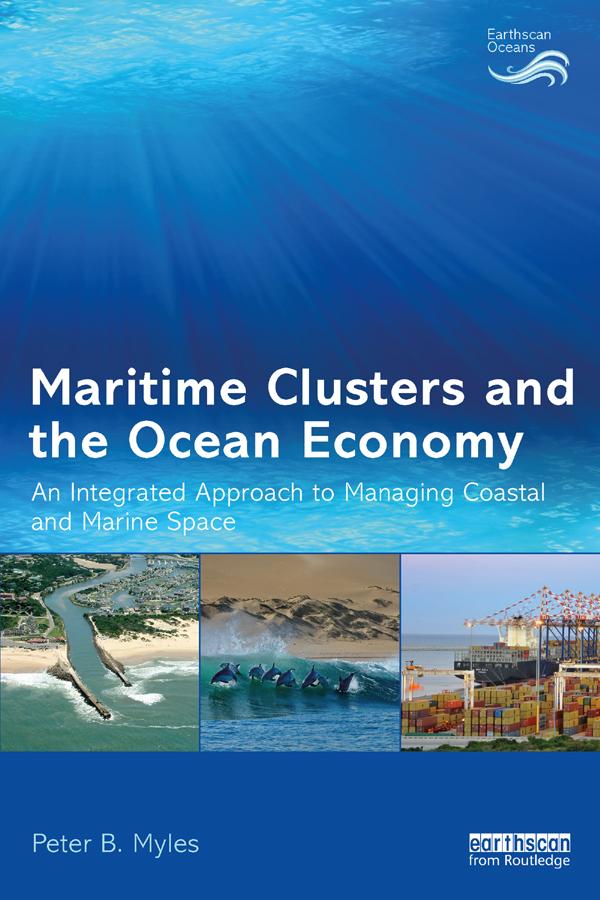
Over the last decade the concept of clustering has become a central idea for analyzing the competitiveness of nations, industries and firms. This book shows how the cluster concept can be usefully applied to the study of maritime activities.
Such activities, including shipping, shipbuilding and port and maritime services, are clearly geographically concentrated in a number of maritime clusters. However, as the author shows, these are having to compete with other uses of the coasts and oceans including capture fisheries, marine aquaculture, offshore energy and tourism. Sound governance and planning is therefore required to manage the competing claims for ocean space. The book shows how competing industries and other stakeholders can cooperate and benefit from an integrated approach to the development of maritime clusters.
The contribution of approaches such as integrated coastal zone management and innovations such as ocean business councils, as well as coordinated networks of maritime clusters are reviewed. Case studies are included from around the world, including detailed examples of the development of the Nelson Mandela Bay Maritime Cluster in South Africa and from Poland in the Baltic Sea.
Płać wygodnie kartą, Klarną, Apple Pay lub Google Pay. Nie jesteś zadowolony? Zawsze masz 14-dniową gwarancję zwrotu pieniędzy. Więcej przeczytasz w naszych warunkach. Masz pytania? Napisz do nas na hello@memmo.org.
Memmo ułatwia naukę – gdziekolwiek jesteś na świecie. U nas znajdziesz podręczniki i sprytne narzędzia do nauki w jednym miejscu: streszczenia, quizy, podcasty i fiszki. A do tego Ted, Twój kumpel do nauki, który odpowie na wszystko, co Cię nurtuje. Ponad 50 000 studentów już tu się uczy – stworzone, byś uczył się szybciej i mniej stresował.