
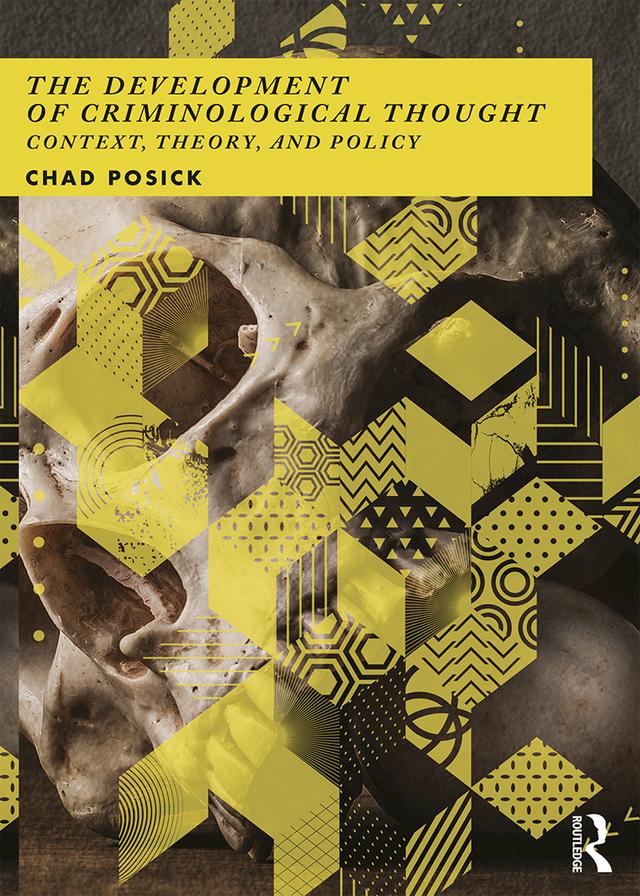
This book focuses on the history and development of criminological thought from the pre-Enlightenment period to the present and offers a detailed and chronological overview of competing theoretical perspectives in criminology in their social and political context.
This book covers:
- A discussion of how major theorists came to espouse their ideas and how the social context of the time influenced the development criminological thought;
- An exploration of the scientific method and the way in which theories are tested;
- Details of the origins of each theory as well as their recent developments in scholarship and research;
- Comparative and international research in theory;
- The empirical support for theory and the relationship between research and policy;
- Biosocial and developmental criminology, including the biosocial underpinnings of criminal behavior and the influence of neuroscience and brain psychology;
- Theoretical applications for explaining different crime types, such as genocide, white-collar crime, and environmental crime;
- A summary of the current state of criminological knowledge and a vision for the future of criminology.
The book includes lists of further reading and chapter summaries, and is supported by timelines of key works and events. This book is essential reading for courses on criminological theory, criminal behaviour, criminal psychology and biosocial criminology.
Płać wygodnie kartą, Klarną, Apple Pay lub Google Pay. Nie jesteś zadowolony? Zawsze masz 14-dniową gwarancję zwrotu pieniędzy. Więcej przeczytasz w naszych warunkach. Masz pytania? Napisz do nas na hello@memmo.org.
Memmo ułatwia naukę – gdziekolwiek jesteś na świecie. U nas znajdziesz podręczniki i sprytne narzędzia do nauki w jednym miejscu: streszczenia, quizy, podcasty i fiszki. A do tego Ted, Twój kumpel do nauki, który odpowie na wszystko, co Cię nurtuje. Ponad 50 000 studentów już tu się uczy – stworzone, byś uczył się szybciej i mniej stresował.