
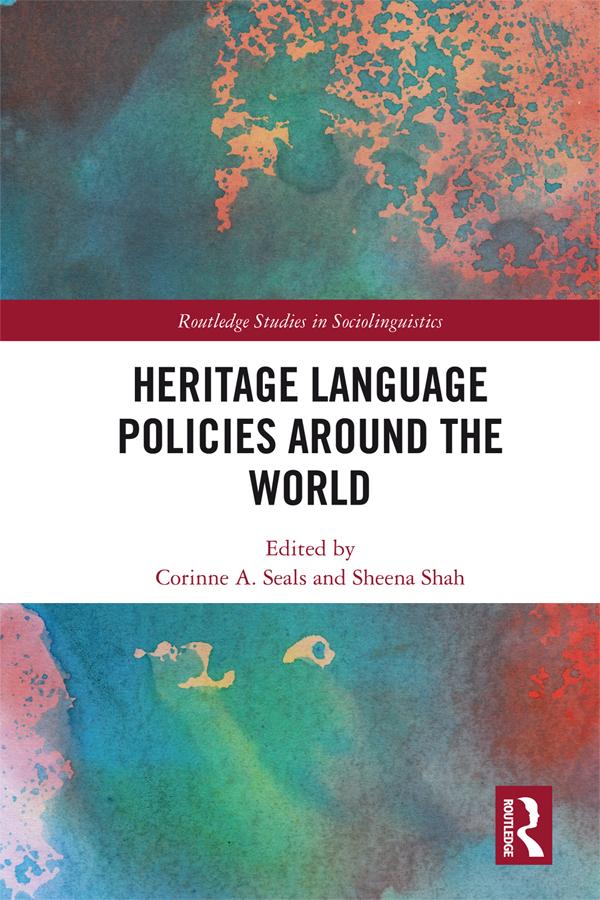
Heritage language policies define the context in which heritage languages are maintained or abandoned by communities, and this volume describes and analyzes international policy strategies, as well as the implications for the actual heritage language speakers.
This volume brings together heritage language policy case studies from around the world, foregrounding globalization by covering five regions: the Americas, Europe, Africa, Asia, and Australasia. The countries profiled include the United States, Canada, Argentina, Norway, Sweden, Ireland, Uganda, Namibia, Morocco, Japan, South Korea, Singapore, New Zealand, Australia, and Fiji. This volume also highlights an expanded definition of ‘heritage language’, choosing to focus on individual and community identities, and therefore including both Indigenous and immigrant languages.
Focusing specifically on language policy relating to heritage languages, the chapters address key questions such as
- Are heritage languages included or excluded from the national language policy discourse?
- What are the successes and shortcomings of efforts to establish heritage language policies?
- What is the definition of ‘heritage language’ in official usage by the local/regional government and stakeholders?
- How are these language policies perceived by the actual heritage language communities?
Płać wygodnie kartą, Klarną, Apple Pay lub Google Pay. Nie jesteś zadowolony? Zawsze masz 14-dniową gwarancję zwrotu pieniędzy. Więcej przeczytasz w naszych warunkach. Masz pytania? Napisz do nas na hello@memmo.org.
Memmo ułatwia naukę – gdziekolwiek jesteś na świecie. U nas znajdziesz podręczniki i sprytne narzędzia do nauki w jednym miejscu: streszczenia, quizy, podcasty i fiszki. A do tego Ted, Twój kumpel do nauki, który odpowie na wszystko, co Cię nurtuje. Ponad 50 000 studentów już tu się uczy – stworzone, byś uczył się szybciej i mniej stresował.