
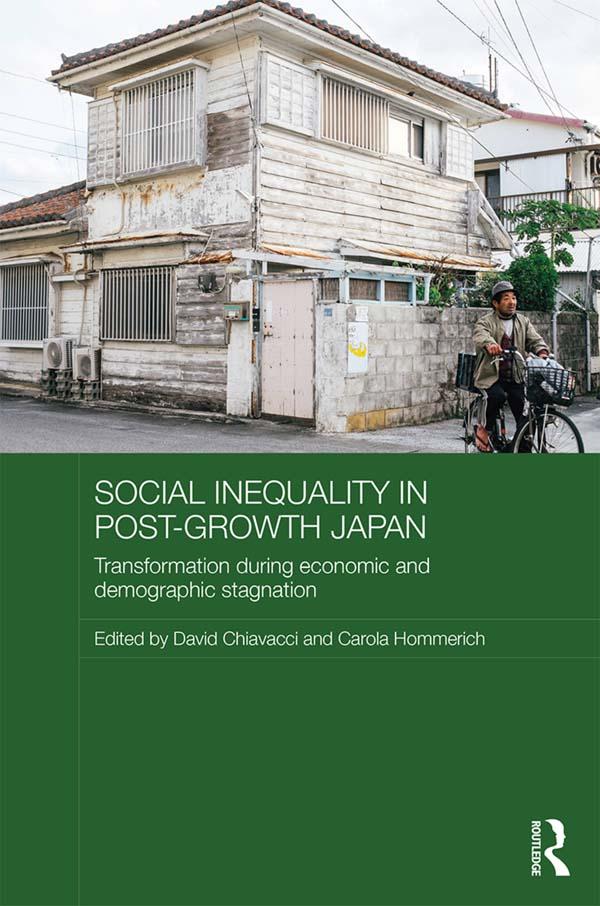
In recent decades Japan has changed from a strongly growing, economically successful nation regarded as prime example of social equality and inclusion, to a nation with a stagnating economy, a shrinking population and a very high proportion of elderly people. Within this, new forms of inequality are emerging and deepening, and a new model of Japan as 'gap society' (kakusa shakai) has become common-sense. These new forms of inequality are complex, are caused in different ways by a variety of factors, and require deep-seated reforms in order to remedy them. This book provides a comprehensive overview of inequality in contemporary Japan. It examines inequality in labour and employment, in welfare and family, in education and social mobility, in the urban-rural divide, and concerning immigration, ethnic minorities and gender. The book also considers the widespread anxiety effect of the fear of inequality; and discusses how far these developments in Japan represent a new form of social problem for the wider world.
Płać wygodnie kartą, Klarną, Apple Pay lub Google Pay. Nie jesteś zadowolony? Zawsze masz 14-dniową gwarancję zwrotu pieniędzy. Więcej przeczytasz w naszych warunkach. Masz pytania? Napisz do nas na hello@memmo.org.
Memmo ułatwia naukę – gdziekolwiek jesteś na świecie. U nas znajdziesz podręczniki i sprytne narzędzia do nauki w jednym miejscu: streszczenia, quizy, podcasty i fiszki. A do tego Ted, Twój kumpel do nauki, który odpowie na wszystko, co Cię nurtuje. Ponad 50 000 studentów już tu się uczy – stworzone, byś uczył się szybciej i mniej stresował.