
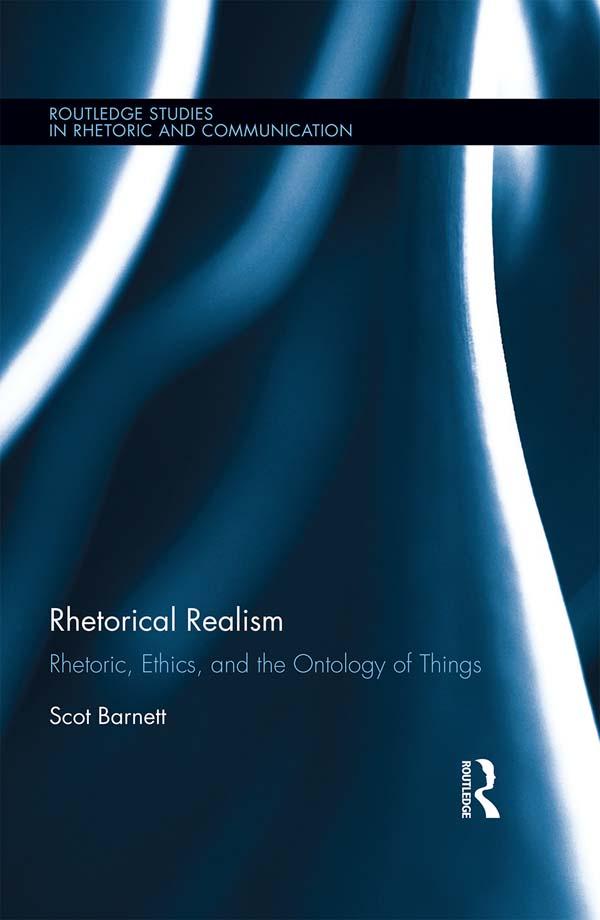
Rhetorical Realism responds to the surging interest in nonhumans across the humanities by exploring how realist commitments have historically accompanied understandings of rhetoric from antiquity to the present. For a discipline that often defines itself according to human speech and writing, the nonhuman turn poses a number of challenges and opportunities for rhetoric. To date, many of the responses to the nonhuman turn in rhetoric have sought to address rhetoric’s compatibility with new conceptions of materiality. In Rhetorical Realism, Scot Barnett extends this work by transforming it into a new historiographic methodology attuned to the presence and occlusion of things in rhetorical history. Through investigations of rhetoric’s place in Aristotelian metaphysics, the language invention movement of the seventeenth century, and postmodern conceptions of rhetoric as an epistemic art, Barnett’s study expands the scope of rhetorical inquiry by showing how realist ideas have worked to frame rhetoric’s scope and meanings during key moments in its history. Ultimately, Barnett argues that all versions of rhetoric depend upon some realist assumptions about the world. Rather than conceive of the nonhuman as a dramatic turning point in rhetorical theory, Rhetorical Realism encourages rhetorical theorists to turn another eye toward what rhetoricians have always done—defining and configuring rhetoric within a broader ontology of things.
Płać wygodnie kartą, Klarną, Apple Pay lub Google Pay. Nie jesteś zadowolony? Zawsze masz 14-dniową gwarancję zwrotu pieniędzy. Więcej przeczytasz w naszych warunkach. Masz pytania? Napisz do nas na hello@memmo.org.
Memmo ułatwia naukę – gdziekolwiek jesteś na świecie. U nas znajdziesz podręczniki i sprytne narzędzia do nauki w jednym miejscu: streszczenia, quizy, podcasty i fiszki. A do tego Ted, Twój kumpel do nauki, który odpowie na wszystko, co Cię nurtuje. Ponad 50 000 studentów już tu się uczy – stworzone, byś uczył się szybciej i mniej stresował.