
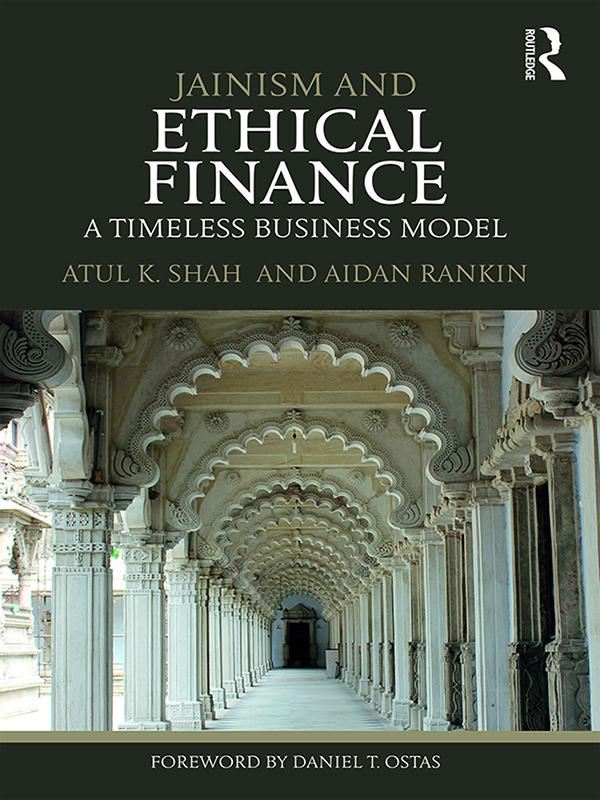
The financial crisis of 2008 has led to a re-evaluation of the role of financial institutions and their relationship with the wider economy and society. This process has meant an increased questioning of both the conduct of business itself and the principles behind commercial and financial activities. Yet non-western voices have been notably absent from this debate, as have alternatives to the dominant western-derived economic ideologies. From the ancient spiritual wisdom or Dharma of the Jains, there emerges a practical modern philosophy fully in tune with the re-emergence of India as a global economic power. Jain individuals, businesses and charities have played a powerful role in India’s rise and within the global Indian Diaspora. Jain communities are noted everywhere for their contributions to business, the professions and science. These successes are based on the principles of interdependence and co-operation, with an emphasis on long-term consolidation rather than short-term bursts of growth. Researchers and students interested in the ethics of finance, accounting and economics will find Jainism and Ethical Finance a scholarly and illuminating evaluation of Jain Dharma as a non-western case study. In the light of current concerns about the way global finance and banking systems operate, this book offers a timely alternative perspective.
.
Płać wygodnie kartą, Klarną, Apple Pay lub Google Pay. Nie jesteś zadowolony? Zawsze masz 14-dniową gwarancję zwrotu pieniędzy. Więcej przeczytasz w naszych warunkach. Masz pytania? Napisz do nas na hello@memmo.org.
Memmo ułatwia naukę – gdziekolwiek jesteś na świecie. U nas znajdziesz podręczniki i sprytne narzędzia do nauki w jednym miejscu: streszczenia, quizy, podcasty i fiszki. A do tego Ted, Twój kumpel do nauki, który odpowie na wszystko, co Cię nurtuje. Ponad 50 000 studentów już tu się uczy – stworzone, byś uczył się szybciej i mniej stresował.