
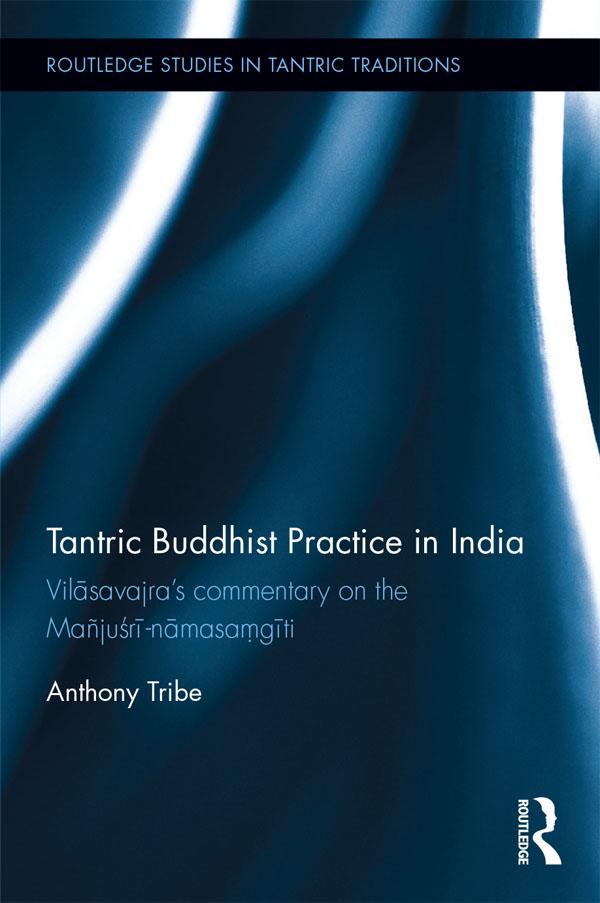
Using a commentary on the influential text, the Mañjuśrī-nāmasaṃgīti, ‘The Chanting of the Names of Mañjuśrī’, this book deals with Buddhist tantric meditation practice and its doctrinal context in early-medieval India. The commentary was written by the 8th-9th century Indian tantric scholar Vilāsavajra, and the book contains a translation of the first five chapters. The translation is extensively annotated, and accompanied by introductions as well as a critical edition of the Sanskrit text based on eight Sanskrit manuscripts and two blockprint editions of the commentary’s Tibetan translation.
The commentary interprets its root text within an elaborate framework of tantric visualisation and meditation that is based on an expanded form of the Buddhist Yoga Tantra mandala, the Vajradhātu-maṇḍala. At its heart is the figure of Mañjuśrī, no longer the familiar bodhisattva of wisdom, but now the embodiment of the awakened non-dual gnosis that underlies all Buddhas as well their activity in the cosmos.
The book contributes to our understanding of the history of Indian tantric Buddhism in a period of significant change and innovation. With its extensively annotated translation and lengthy introductions the book is designed to appeal not only to professional scholars and research students but also to contemporary Buddhists.
Płać wygodnie kartą, Klarną, Apple Pay lub Google Pay. Nie jesteś zadowolony? Zawsze masz 14-dniową gwarancję zwrotu pieniędzy. Więcej przeczytasz w naszych warunkach. Masz pytania? Napisz do nas na hello@memmo.org.
Memmo ułatwia naukę – gdziekolwiek jesteś na świecie. U nas znajdziesz podręczniki i sprytne narzędzia do nauki w jednym miejscu: streszczenia, quizy, podcasty i fiszki. A do tego Ted, Twój kumpel do nauki, który odpowie na wszystko, co Cię nurtuje. Ponad 50 000 studentów już tu się uczy – stworzone, byś uczył się szybciej i mniej stresował.