
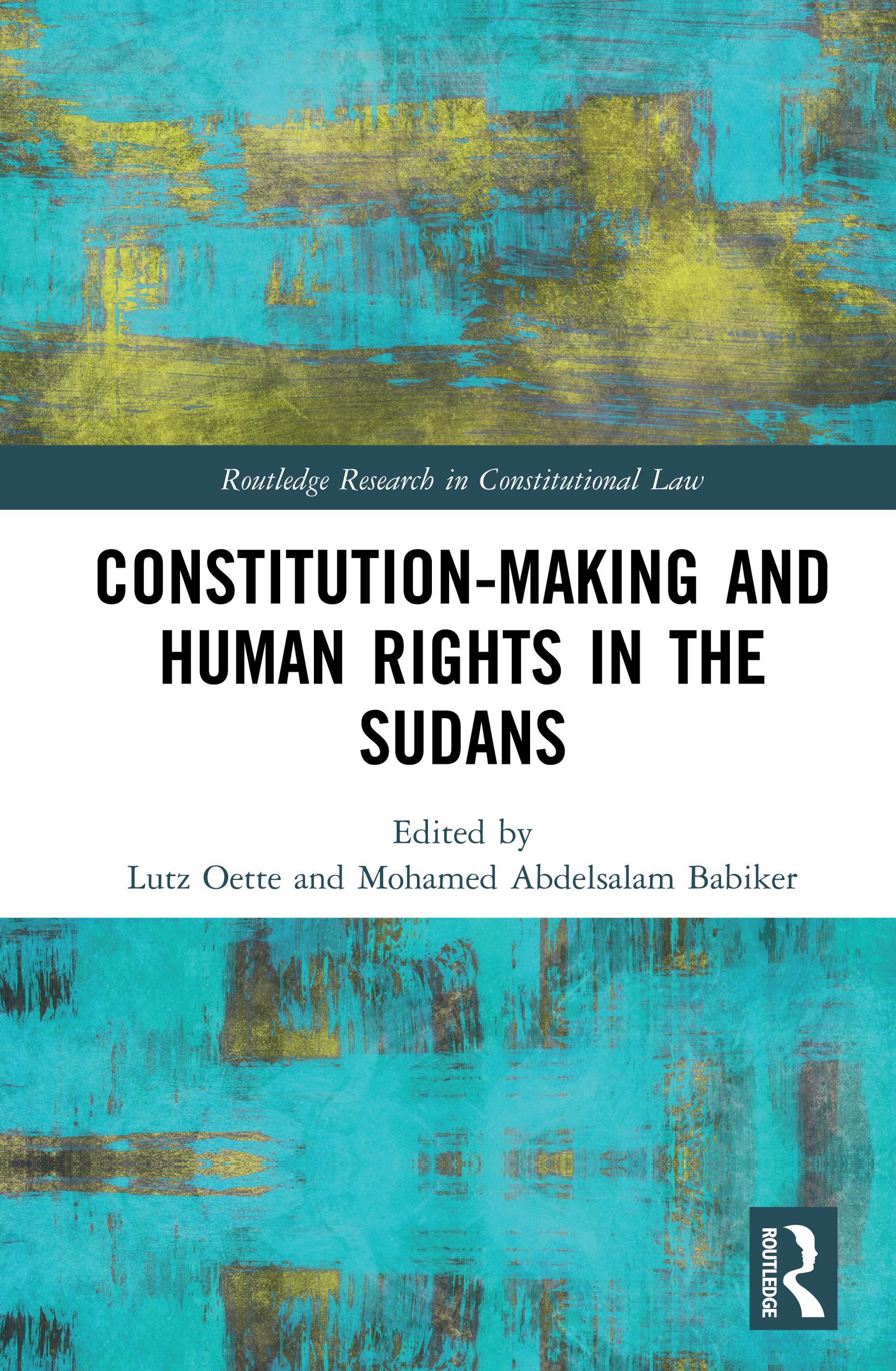
Sudan and South Sudan have suffered from repeated cycles of conflict and authoritarianism resulting in serious human rights and humanitarian law violations. Several efforts, such as the 2005 Comprehensive Peace Agreement and transitional justice initiatives have recognized that the failure to develop a stable political and legal order is at the heart of Sudan’s governance problems. Following South Sudan’s independence in 2011, parallel constitutional review processes are under way that have prompted intense debates about core issues of Sudan’s identity, governance and rule of law, human rights protection and the relationship between religion and the State.
This book provides an in-depth study of Sudan’s constitutional history and current debates with a view to identifying critical factors that would enable Sudan and South Sudan to overcome the apparent failure to agree on and implement a stable order conducive to sustainable peace and human rights protection. It examines relevant processes against the broader (constitutional) history of Sudan and identifies the building blocks for constitutional reforms through a detailed analysis of Sudanese law and politics. The book addresses constitutionalism and constitutional rights protection in their political, legal and institutional context in Sudan and South Sudan, and the repercussions of the relationship between state and religion for the right to freedom of religion, minority rights and women’s rights.
Płać wygodnie kartą, Klarną, Apple Pay lub Google Pay. Nie jesteś zadowolony? Zawsze masz 14-dniową gwarancję zwrotu pieniędzy. Więcej przeczytasz w naszych warunkach. Masz pytania? Napisz do nas na hello@memmo.org.
Memmo ułatwia naukę – gdziekolwiek jesteś na świecie. U nas znajdziesz podręczniki i sprytne narzędzia do nauki w jednym miejscu: streszczenia, quizy, podcasty i fiszki. A do tego Ted, Twój kumpel do nauki, który odpowie na wszystko, co Cię nurtuje. Ponad 50 000 studentów już tu się uczy – stworzone, byś uczył się szybciej i mniej stresował.