
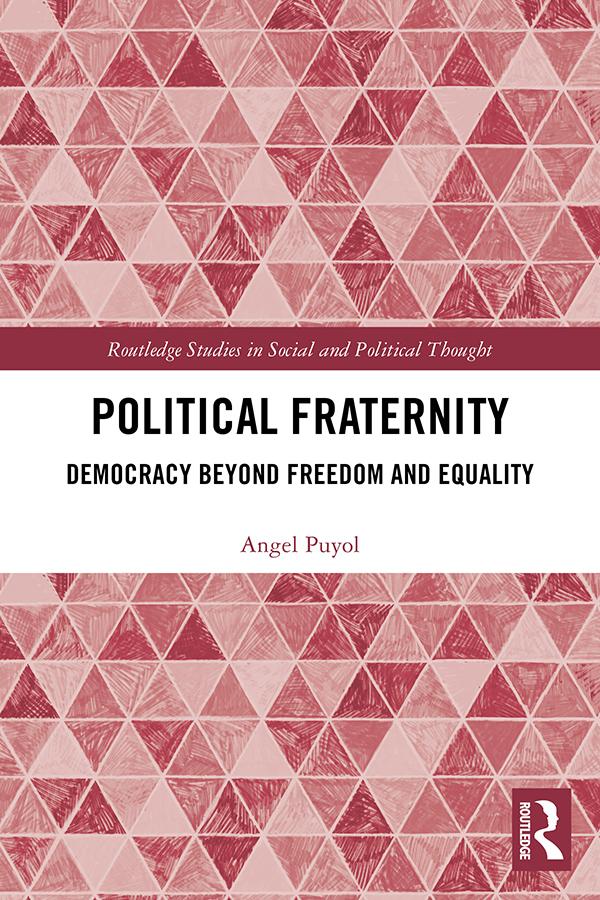
Fraternity is a feeling, and a moral virtue, but fraternity is also a political concept.
The French Revolution proclaimed an ethical and political ideal with its three principles: liberty, equality and fraternity. Since then, western political philosophy has gone to great lengths to analyse the liberty and equality, but has ignored, and even disdained, the third part of the revolutionary triad: fraternity. Forgetting or underestimating fraternity as a political category is unjustifiable. Political fraternity can help us to overcome some of the main problems with liberal egalitarianism and theories of liberty in current social and political thought, and it contributes to a better understanding of the real significance of justice and democracy.
In this book, Angel Puyol examines the theoretical and normative challenges of the political idea of fraternity, its history and meanings, its role in current political philosophy, its distinction regarding related concepts – such as relational equality, solidarity or civic friendship – the place that political fraternity should occupy in feminist criticism, and its relationship to social justice, global justice and democracy in modern-day politics.
Płać wygodnie kartą, Klarną, Apple Pay lub Google Pay. Nie jesteś zadowolony? Zawsze masz 14-dniową gwarancję zwrotu pieniędzy. Więcej przeczytasz w naszych warunkach. Masz pytania? Napisz do nas na hello@memmo.org.
Memmo ułatwia naukę – gdziekolwiek jesteś na świecie. U nas znajdziesz podręczniki i sprytne narzędzia do nauki w jednym miejscu: streszczenia, quizy, podcasty i fiszki. A do tego Ted, Twój kumpel do nauki, który odpowie na wszystko, co Cię nurtuje. Ponad 50 000 studentów już tu się uczy – stworzone, byś uczył się szybciej i mniej stresował.