
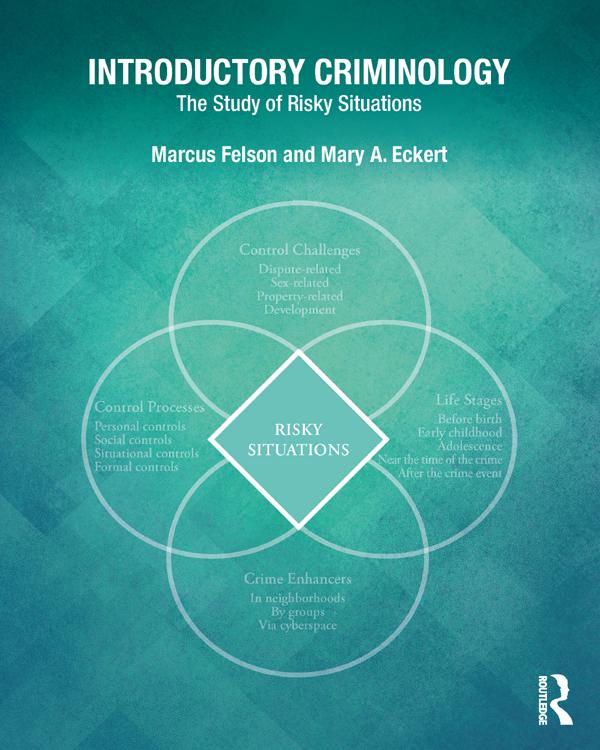
Introductory Criminology: The Study of Risky Situations takes a unique and intuitive approach to teaching and learning criminology. Avoiding the fragmentation of ideas commonly found in criminology textbooks, Marcus Felson and Mary A. Eckert develop a more practical, readable structure that engages the reader and enhances their understanding of the material. Their descriptive categories, simultaneously broad and realistic, serve better than the usual philosophical categories, such as "positivism" and "classicalism," to stimulate students’ interest and critical thinking. Short chapters, each broken into 5–7 sections, describe situations in which crime is most likely to happen, and explain why they are risky and what society can and can’t do about crime. They create a framework to organize ideas and facts, and then link these categories to the leading theories developed by criminologists over the last 100 years. With this narrative to guide them, students remember the material beyond the final exam.
This fresh new text was created by two professors to address the main points they encounter in teaching their own criminology courses. Problems solved include: reluctant readers, aversion to abstract thinking, fear of theory, and boredom with laundry lists of disconnected ideas. Felson, a leader in criminology theory with a global reputation for innovative thinking, and Eckert, an experienced criminal justice researcher, are uniquely qualified to reframe criminology in a unified arc. By design, they offer abstractions that are useful and not overbearing; their prose is readable, and their concepts are easy to comprehend and remember. This new textbook challenges instructors to re-engage with theory and present the essence of criminological thought for adult learners, coaching students to grasp the concept before any label is attached and allowing them to emerge with deeper understanding of what each theory means and offers. Lean, with no filler or fluff like stock photos, Introductory Criminology includes the authors’ graphics to crystallize and expand concepts from the text.
Płać wygodnie kartą, Klarną, Apple Pay lub Google Pay. Nie jesteś zadowolony? Zawsze masz 14-dniową gwarancję zwrotu pieniędzy. Więcej przeczytasz w naszych warunkach. Masz pytania? Napisz do nas na hello@memmo.org.
Memmo ułatwia naukę – gdziekolwiek jesteś na świecie. U nas znajdziesz podręczniki i sprytne narzędzia do nauki w jednym miejscu: streszczenia, quizy, podcasty i fiszki. A do tego Ted, Twój kumpel do nauki, który odpowie na wszystko, co Cię nurtuje. Ponad 50 000 studentów już tu się uczy – stworzone, byś uczył się szybciej i mniej stresował.