
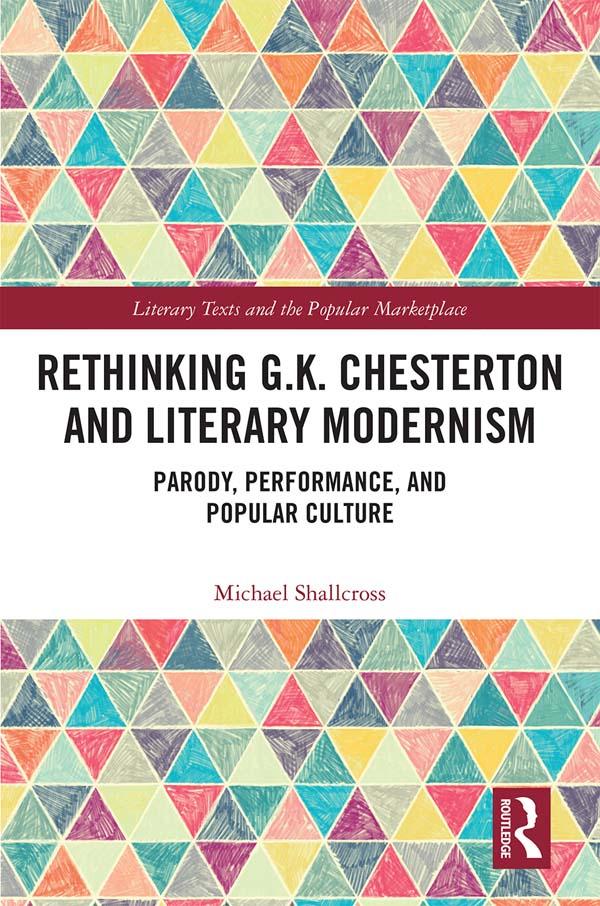
This book comprehensively rethinks the relationship between G.K. Chesterton and a range of key literary modernists. When Chesterton and modernism have previously been considered in relation to one another, the dynamic has typically been conceived as one of mutual hostility, grounded in Chesterton’s advocacy of popular culture and modernist literature’s appeal to an aesthetic elite. In setting out to challenge this binary narrative, Shallcross establishes for the first time the depth and ambivalence of Chesterton’s engagement with modernism, as well as the reciprocal fascination of leading modernist writers with Chesterton’s fiction and thought.
Shallcross argues that this dynamic was defined by various forms of parody and performance, and that these histrionic expressions of cultural play not only suffused the era, but found particular embodiment in Chesterton’s public persona. This reading not only enables a far-reaching reassessment of Chesterton’s corpus, but also produces a framework through which to re-evaluate the creative and critical projects of a host of modernist writers—most sustainedly, T.S. Eliot, Wyndham Lewis, and Ezra Pound—through the prism of Chesterton's disruptive presence. The result is an innovative study of the literary performance of popular and ‘high’ culture in early twentieth-century Britain, which adds a valuable new perspective to continuing critical debates on the parameters of modernism.
Płać wygodnie kartą, Klarną, Apple Pay lub Google Pay. Nie jesteś zadowolony? Zawsze masz 14-dniową gwarancję zwrotu pieniędzy. Więcej przeczytasz w naszych warunkach. Masz pytania? Napisz do nas na hello@memmo.org.
Memmo ułatwia naukę – gdziekolwiek jesteś na świecie. U nas znajdziesz podręczniki i sprytne narzędzia do nauki w jednym miejscu: streszczenia, quizy, podcasty i fiszki. A do tego Ted, Twój kumpel do nauki, który odpowie na wszystko, co Cię nurtuje. Ponad 50 000 studentów już tu się uczy – stworzone, byś uczył się szybciej i mniej stresował.