
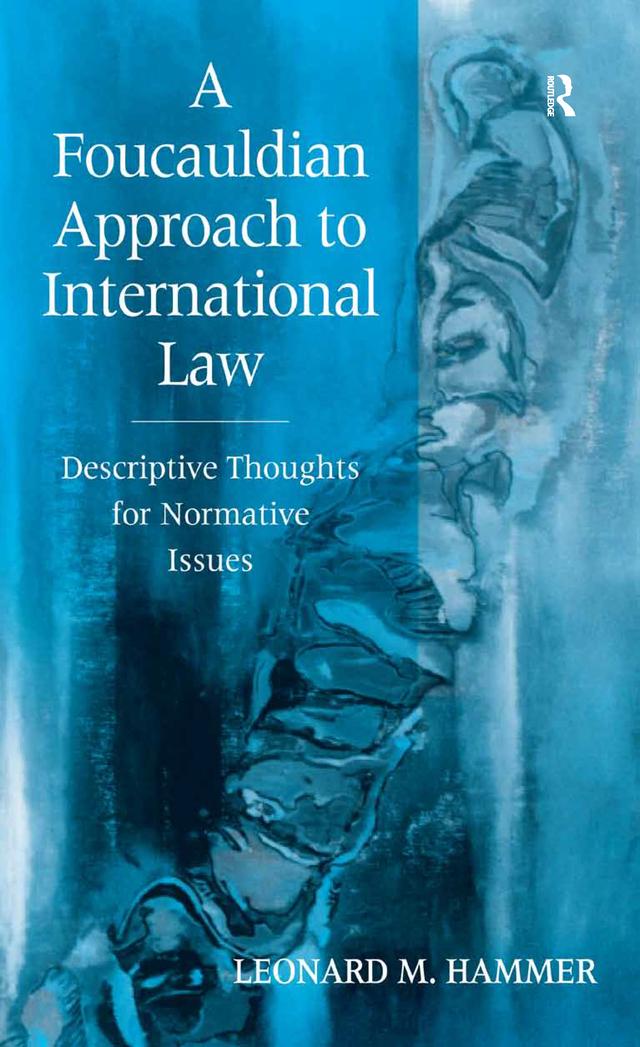
Foucault's challenging view of power and knowledge as the basis for interpreting the international system forms the central themes of this book. As the application of international law expands and develops this book considers how Foucault's approach may create a viable framework that is not beset by ontological issues. With International law essentially stuck within an older framework of outmoded statist approaches, and overly broad understanding of the significance of external actors such as international organizations; current interpretations are either rooted in a narrow attempt to demonstrate a functioning normative structure or interpret developments as reflective of some emerging and somewhat unwieldy ethical order. This book therefore aims to ameliorate the approaches of a number of different 'schools' within the disciplines of international law and international relations, without being wedded to a single concept. Current scholarship in international law tends to favour an unresolved critique, a utopian vision, or to refer to other disciplines like international relations without fully explaining the significance or importance of taking such a step. This book analyses a variety of problems and issues that have surfaced within the international system and provides a framework for consideration of these issues, with a view towards accounting for ongoing developments in the international arena.
Płać wygodnie kartą, Klarną, Apple Pay lub Google Pay. Nie jesteś zadowolony? Zawsze masz 14-dniową gwarancję zwrotu pieniędzy. Więcej przeczytasz w naszych warunkach. Masz pytania? Napisz do nas na hello@memmo.org.
Memmo ułatwia naukę – gdziekolwiek jesteś na świecie. U nas znajdziesz podręczniki i sprytne narzędzia do nauki w jednym miejscu: streszczenia, quizy, podcasty i fiszki. A do tego Ted, Twój kumpel do nauki, który odpowie na wszystko, co Cię nurtuje. Ponad 50 000 studentów już tu się uczy – stworzone, byś uczył się szybciej i mniej stresował.
Może Ci się spodobać
Kup książkę0