
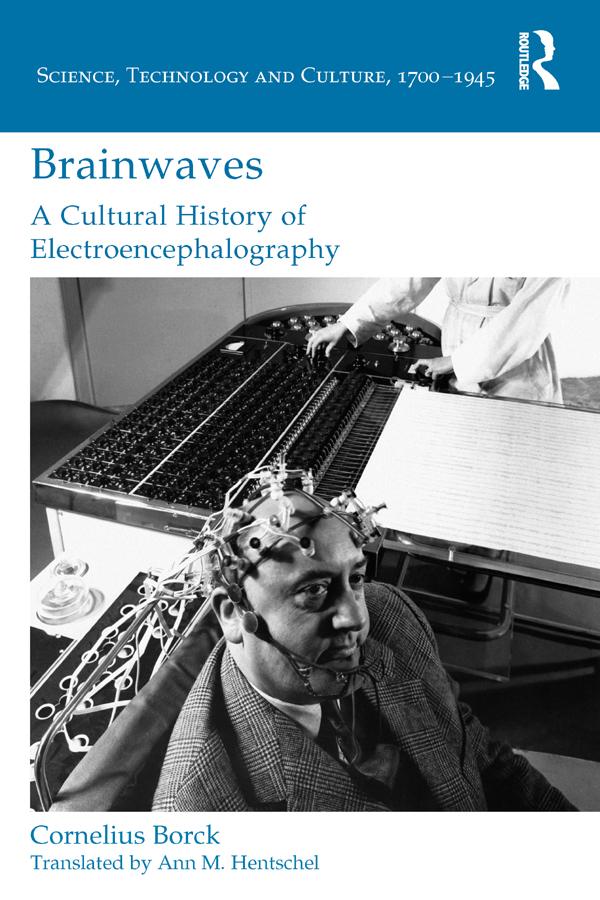
In the history of brain research, the prospect of visualizing brain processes has continually awakened great expectations. In this study, Cornelius Borck focuses on a recording technique developed by the German physiologist Hans Berger to register electric brain currents; a technique that was expected to allow the brain to write in its own language, and which would reveal the way the brain worked. Borck traces the numerous contradictory interpretations of electroencephalography, from Berger’s experiments and his publication of the first human EEG in 1929, to its international proliferation and consolidation as a clinical diagnostic method in the mid-twentieth century. Borck's thesis is that the language of the brain takes on specific contours depending on the local investigative cultures, from whose conflicting views emerged a new scientific object: the electric brain.
Płać wygodnie kartą, Klarną, Apple Pay lub Google Pay. Nie jesteś zadowolony? Zawsze masz 14-dniową gwarancję zwrotu pieniędzy. Więcej przeczytasz w naszych warunkach. Masz pytania? Napisz do nas na hello@memmo.org.
Memmo ułatwia naukę – gdziekolwiek jesteś na świecie. U nas znajdziesz podręczniki i sprytne narzędzia do nauki w jednym miejscu: streszczenia, quizy, podcasty i fiszki. A do tego Ted, Twój kumpel do nauki, który odpowie na wszystko, co Cię nurtuje. Ponad 50 000 studentów już tu się uczy – stworzone, byś uczył się szybciej i mniej stresował.
Może Ci się spodobać
Kup książkę0