
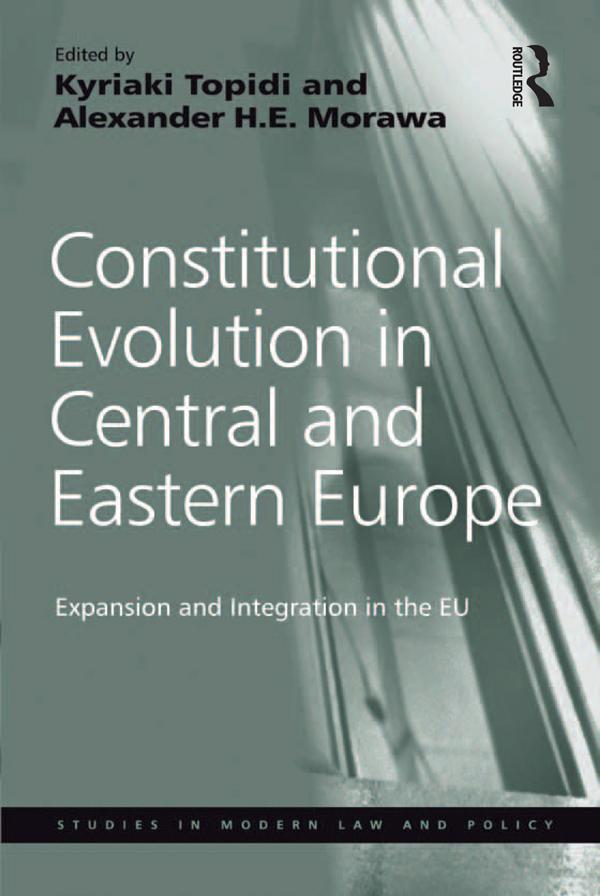
This book examines EU enlargement by studying how domestic constitutional evolution in the new member states contributes to European integration. In contrast to the usual top-down analytical pattern, it reverses the paradigm by looking at constitutional developments and dynamics from the bottom-up, studying how domestic constitutional evolution contributes to European integration. The authors analyze constitutional trends from the perspective of 'new Member States' as policy-makers and not strictly as policy-takers. The issue of conditionality is also explored in a discussion of the extent to which pre-2004 and 2007 conditionality has had lasting effects at the level of constitutionalization of different areas and norms and if so, of what kind. The exploration of Europeanization effects in recent Member States substantiates and demonstrates how enlargement has been an important driving-force for the effective export of EU legal rules in this region. The book utilizes a comparative approach to highlight the merits and obstacles created by the growing diversity in the constitutional rules and patterns of the new Member States. It also contains a section that places the CEE constitutionalizing map in a broader comparative European and global context, establishing links with similar transitional regimes in the continent and elsewhere.
Płać wygodnie kartą, Klarną, Apple Pay lub Google Pay. Nie jesteś zadowolony? Zawsze masz 14-dniową gwarancję zwrotu pieniędzy. Więcej przeczytasz w naszych warunkach. Masz pytania? Napisz do nas na hello@memmo.org.
Memmo ułatwia naukę – gdziekolwiek jesteś na świecie. U nas znajdziesz podręczniki i sprytne narzędzia do nauki w jednym miejscu: streszczenia, quizy, podcasty i fiszki. A do tego Ted, Twój kumpel do nauki, który odpowie na wszystko, co Cię nurtuje. Ponad 50 000 studentów już tu się uczy – stworzone, byś uczył się szybciej i mniej stresował.
Może Ci się spodobać
Kup książkę0