
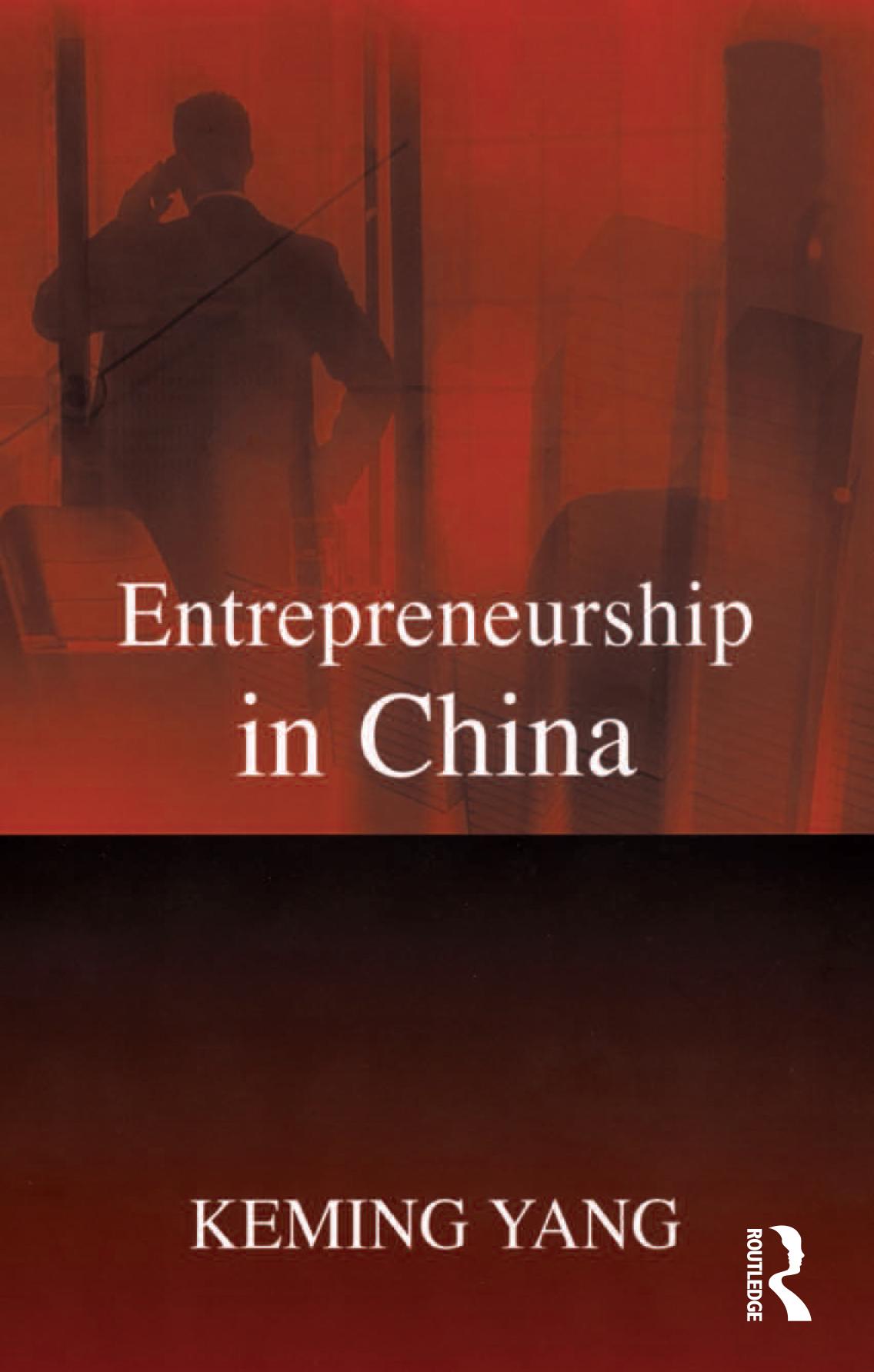
The emergence of China as a major world economy is of great importance to the global political economy and to international business. There has been much research on the macro level of institutional reform but little detailed work on the grassroots level of entrepreneurship in China. This innovative book addresses this gap by investigating how an economic system dominated by central plans, communist ideologies and suppressing bureaucracies could generate such energy from the bottom of society, fuelling the country's economic growth. Keming Yang’s theory of entrepreneurship is based on two interrelated concepts: double entrepreneurship and institutional holes. He argues that the two concepts bridge a gap between the neo-classical institutionalism of economic development and entrepreneurship studies that emphasize individual choice. The rigorous theoretical framework is supported by substantial empirical research, offering statistical analyses of survey data as well as detailed case studies. This timely book will appeal to an interdisciplinary readership in sociology, economics, business studies and Chinese and Asian Studies.
Płać wygodnie kartą, Klarną, Apple Pay lub Google Pay. Nie jesteś zadowolony? Zawsze masz 14-dniową gwarancję zwrotu pieniędzy. Więcej przeczytasz w naszych warunkach. Masz pytania? Napisz do nas na hello@memmo.org.
Memmo ułatwia naukę – gdziekolwiek jesteś na świecie. U nas znajdziesz podręczniki i sprytne narzędzia do nauki w jednym miejscu: streszczenia, quizy, podcasty i fiszki. A do tego Ted, Twój kumpel do nauki, który odpowie na wszystko, co Cię nurtuje. Ponad 50 000 studentów już tu się uczy – stworzone, byś uczył się szybciej i mniej stresował.
Może Ci się spodobać
Kup książkę0