
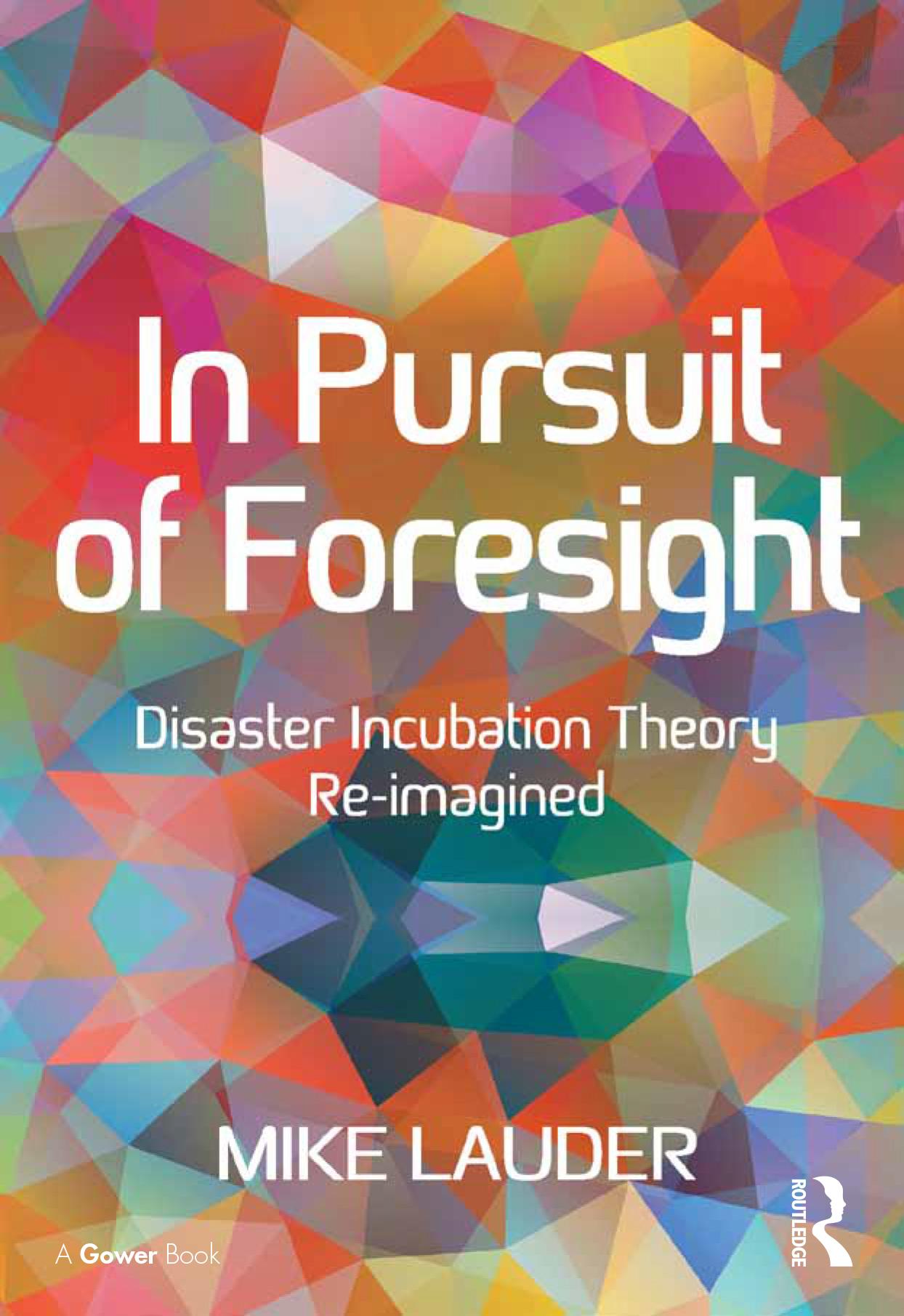
Many inquiry reports blame management for their failures of foresight. These reports are based on the premise that, with a little more thought, these oversights, and so the crisis, would have been avoided. Is it really that simple? The important question is whether, without hindsight, it would have even been possible to identify the actual factors that lead to the failure. This book explores this issue as a practical problem.
The book takes Barry Turner’s Disaster Incubation Theory as its central theme. The first chapter explores the way Turner structured his theory and the way it has been used, before re-imagining it as a way to fostering foresight. The next three chapters examine key issues in detail. They explain why Turner's model was chosen, outline the issues that need to be considered when seeking to prevent such failures and how to use the proposed frameworks. Chapter 5 examines the lessons learnt from this study and, in particular, looks at the mental approach required when seeking such foresight. Finally, Chapter 6 provides a fully worked example. It uses work by Frank Stech who has applied Turner's theory to a past case.
Crises occur everywhere and we continue to struggle to avoid them. In this book Mike Lauder provides executives with thinking tools to help them avoid missing the warning signs of their next crisis.
Płać wygodnie kartą, Klarną, Apple Pay lub Google Pay. Nie jesteś zadowolony? Zawsze masz 14-dniową gwarancję zwrotu pieniędzy. Więcej przeczytasz w naszych warunkach. Masz pytania? Napisz do nas na hello@memmo.org.
Memmo ułatwia naukę – gdziekolwiek jesteś na świecie. U nas znajdziesz podręczniki i sprytne narzędzia do nauki w jednym miejscu: streszczenia, quizy, podcasty i fiszki. A do tego Ted, Twój kumpel do nauki, który odpowie na wszystko, co Cię nurtuje. Ponad 50 000 studentów już tu się uczy – stworzone, byś uczył się szybciej i mniej stresował.