
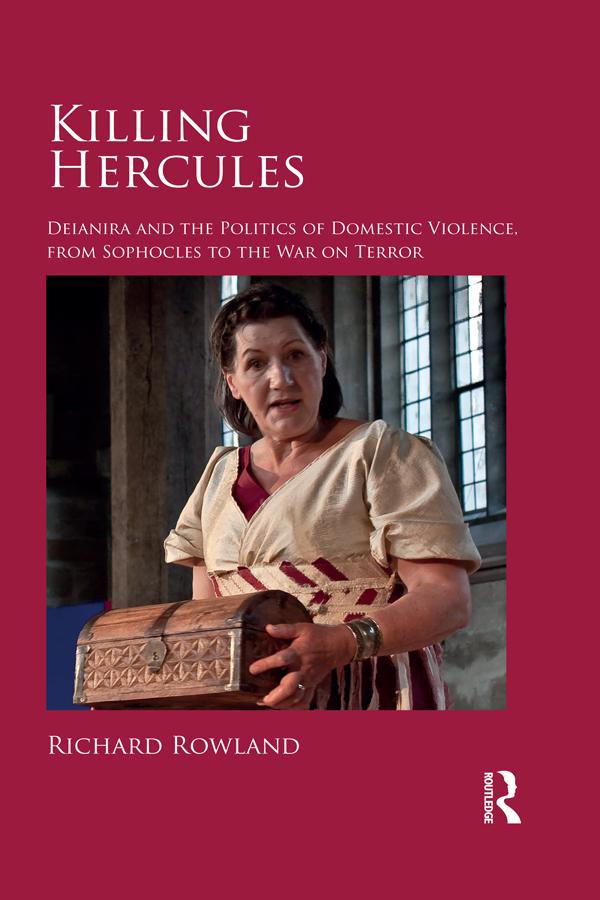
This book offers an entirely new reception history of the myth of Hercules and his wife/killer Deianira. The book poses, and attempts to answer, two important and related questions. First, why have artists across two millennia felt compelled to revisit this particular myth to express anxieties about violence at both a global and domestic level? Secondly, from the moment that Sophocles disrupted a myth about the definitive exemplar of masculinity and martial prowess and turned it into a story about domestic abuse, through to a 2014 production of Handel’s Hercules that was set in the context of the ‘war on terror’, the reception history of this myth has been one of discontinuity and conflict; how and why does each culture reinvent this narrative to address its own concerns and discontents, and how does each generation speak to, qualify or annihilate the certainties of its predecessors in order to understand, contain or exonerate the aggression with which their governors – of state and of the household – so often enforce their authority, and the violence to which their nations, and their homes, are perennially vulnerable?
Płać wygodnie kartą, Klarną, Apple Pay lub Google Pay. Nie jesteś zadowolony? Zawsze masz 14-dniową gwarancję zwrotu pieniędzy. Więcej przeczytasz w naszych warunkach. Masz pytania? Napisz do nas na hello@memmo.org.
Memmo ułatwia naukę – gdziekolwiek jesteś na świecie. U nas znajdziesz podręczniki i sprytne narzędzia do nauki w jednym miejscu: streszczenia, quizy, podcasty i fiszki. A do tego Ted, Twój kumpel do nauki, który odpowie na wszystko, co Cię nurtuje. Ponad 50 000 studentów już tu się uczy – stworzone, byś uczył się szybciej i mniej stresował.